"Part of Us Still Dreams of Being There": Gerard Silva reflects on community, voice, and being part of TO BE HERE
What does it mean to belong, to gather, and to spend a year in reflection and creation? Gerard Silva, a participant in TO BE HERE, talks with Journey Arts’ Executive Director Carly Rapaport-Stein about being a part of the creative process. From a cherished pilón passed down by his beloved Tía Flor to the unexpected connections that flourished with fellow participants, Gerard shares how this community gathering project created space for vulnerability, belonging, and the kind of honoring that art makes possible.
Carly Rapaport-Stein: Gerard, thank you so much for chatting with me about being a part of TO BE HERE. Let’s start at the beginning: what first piqued your interest in participating in this project?
Gerard Silva: I already knew the two creators of the project, Magda Martinez and Lynda Grace Black, and was familiar with the impactful, creative work they do in Philadelphia. I’ve also attended many of Journey Arts’ outstanding productions over the years, so for me, it felt like a win-win situation.
CRS: It is so lovely all-around to have you participate! I’m curious: how would you describe this project and the feeling of the gatherings to someone who wasn't there?
GS: The experience was thrilling because we were all stepping into the gatherings without really knowing what to expect. We didn’t know who would be there or exactly what we would be doing beyond coming together in the same space. The one thing we did know was that we shared a common thread: the immigrant and migrant experience.
The organizers approached the project very organically, paying close attention to the energy in the room. They understood that we first needed to build trust and get to know one another, but the group they brought together was so remarkable that those connections formed almost instantly. It truly felt beautiful and deeply heartfelt. At first, we each revealed small pieces of ourselves, and with every gathering, we opened up more and more.
But to summarize the project: A group of beautiful people came together in different spaces throughout the city, guided by two incredible women who had a thoughtful series of plans but, more importantly, knew how to truly listen, read the room, and recognize which moments deserved to be preserved in order to honor the importance of our stories.
CRS: Honoring stories was key to this project. Was there an object or memory you shared that felt especially meaningful to bring into the space?
GS: I have what I consider an heirloom from a dear family member—probably the only item ever passed down to me. It is a pilón, a handmade wooden kitchen tool consisting of a mortar and pestle used to mash ingredients. This well-worn piece was gifted to me by my aunt, who was in her nineties at the time.
I used to visit her every Sunday, and we would spend hours talking together. I loved her deeply.
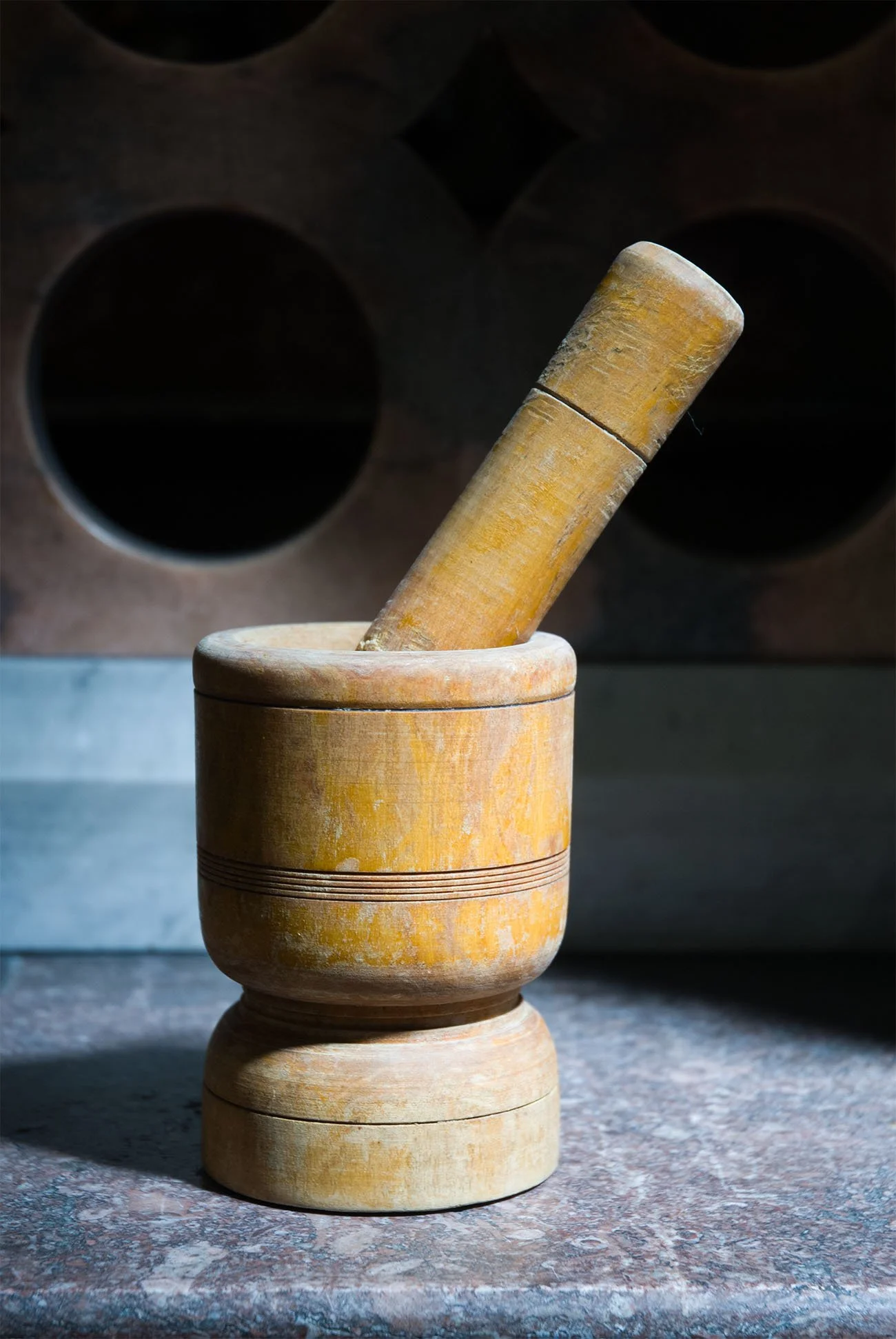
A pilón that belonged to Tía Flor.
At the time, I didn’t fully understand the significance of her gift, but over the years, as I’ve continued to use the pilón in my kitchen and in my cooking, I came to realize that she was passing down culture, tradition, and memory through this precious object. It became so much more than a kitchen tool—it became a connection to her, to my roots, and to the generations before me. I also underestimated how many stories this object carried within it. I will always remember mi Tía Flor.
CRS: And it’s so beautiful to honor her through this process. I wonder, did this process shift or change the way you think about your own story or experiences?
GS: In many ways, the process made me feel more connected, knowing that my story and emotions are shared by so many others living in the diaspora or coming from immigrant families. It gave me a voice and created a space where I felt genuinely comfortable expressing myself with honesty and vulnerability. Through that experience, I began to look more closely at the objects, foods, and memories around me—small but meaningful things that continue to connect me to my humble beginnings.
CRS: And those small things can carry such powerful resonance. What do you hope audiences carry forward with them after experiencing TO BE HERE?
GS: TO BE HERE is about being seen, and to me, that is the heart of the project. We all live in Philadelphia, and while everyone carries their own story, ours are deeply shaped by sacrifice, immigration, migration, resilience, and perseverance. Our baggage is full of memories and longing; the weather is sunny, the beaches are blue, the mountains are green, and the food is simply delicious. We invite you to travel with us through these stories, because while we live here, part of us still dreams of being there too. These are stories often kept quietly within us, yet through art, they are finally given the space to shine.
Join Gerard and an ensemble of Philadelphians on June 11, 12, and 13 for TO BE HERE.
Gerard Silva is a visual artist and the Director of Exhibitions and Community Outreach at Fleisher Art Memorial. You can view some of his work below and on Instagram.