
Every Day Objects, Museum-Worthy Stories: Inside the Making of TO BE HERE
What does it mean to belong to a place, to a memory, to one another? TO BE HERE collaborators Magda Martinez and Lynda Grace Black reflect on the personal and community-driven process behind the performance and exhibition. Through gatherings and collective reflection, TO BE HERE became more than a project: it became an ensemble, a tapestry of voices, and an invitation to see one another more fully. Read on for the full conversation with Journey Arts’ executive director, Carly Rapaport-Stein, and step inside the creative process behind this moving new work.
Carly Rapaport-Stein: I’m so happy to be here with you, Lynda and Magda, and to reflect on the past year and a half of creation for our upcoming project TO BE HERE. Let’s start by diving into that process. Since it is a show that so emphasizes journeys, why don't you tell me about your creative journey on this project?
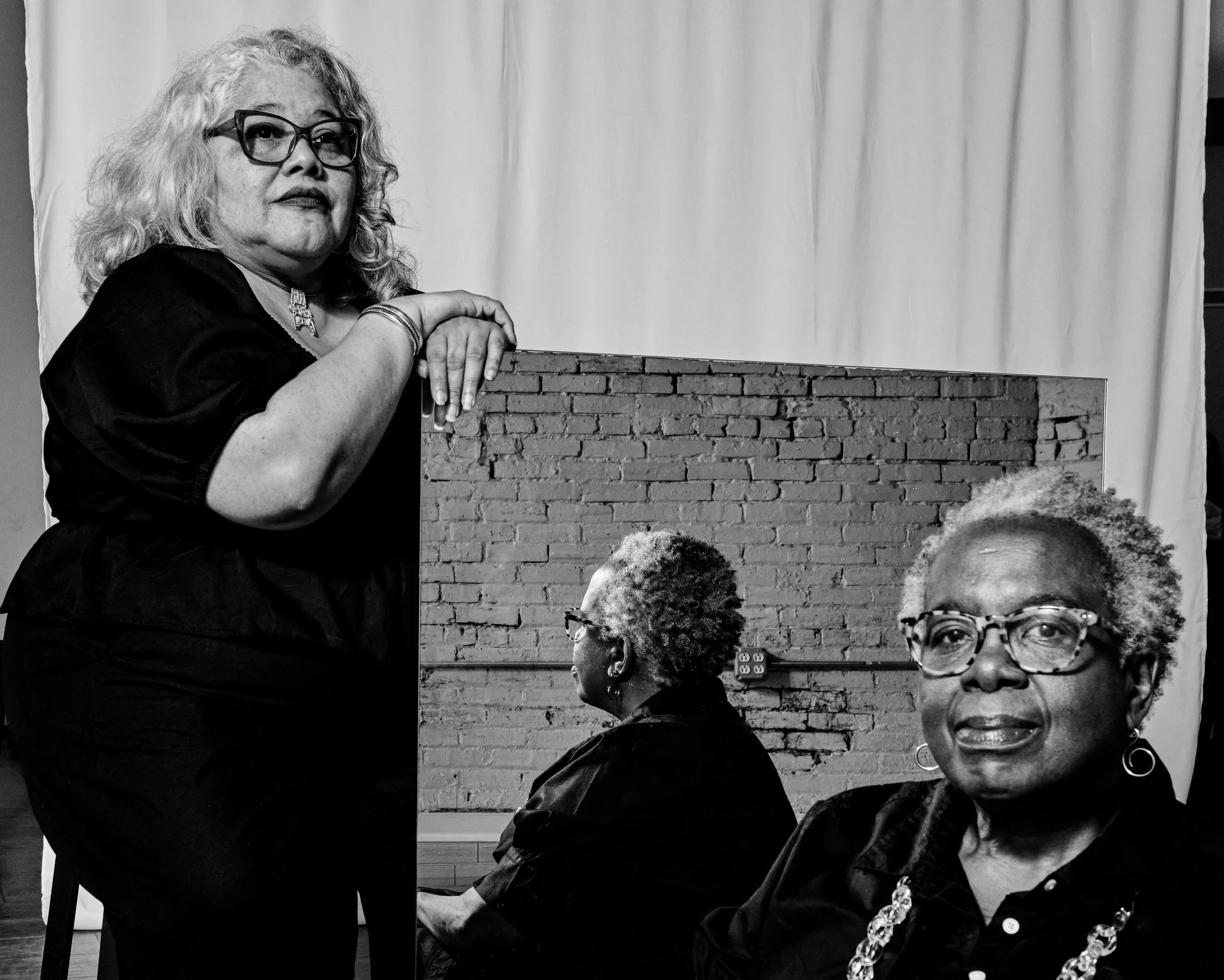
Magda Martinez: To answer I have to start from my beginnings. I come from two parents that were born elsewhere and came to the United States. I'm going to use a phrase, to pass, and I hope I don't offend anyone, but I can't pass for anything else. There are people who are Puerto Rican, Ecuadorian who present as European. I don't. I'm not Afro Latina, but I'm also not a European Latina. So I experienced otherness growing up in the United States, even though I was born here.
It's something that has always guided my work, my own personal work, my writing. I've been writing, documenting, reflecting since I was very young. I realized I come from people who, because of our diaspora, tell our history or familial lineage through stories, attempting to function in a country where what is written is what's real. When I was around 11 or 12, I realized it's what's written down that's real. That's what gets documented.
That is what's respected. I am reflected in those stories and so I write. It is really important to me that people have an opportunity to find voice, to take up space with their stories. And so I think this project lives there. This opportunity to create a space for people to feel like their story does not have to be big. It doesn't have to make history. Actually, we don't know yet if it will make history. We don't know what's going to come. And they're allowed to take up space. They're allowed to take up room. So that for me is the process.
Lynda and I discovered that we were both applying for Journey Arts’ open creative call for proposals. And as we got talking, we decided to apply together. We were thinking about the sounds of the city, and how when you immigrate, when you migrate, your vocabulary of sound shifts too, as does its language. The nuance of language shifts. And then we were off to the races and we decided to put this thing together.
CRS: And part of what was so compelling about reading your application is the two of you together, thinking about this together. Lynda, do you want to add to that?
Lynda Grace Black: I think I've been carrying a concern for people who are making their way to this country for a while. Related to that is a line from a poem I recently recalled. It woke me in the middle of the night a few months ago, but it has been with me since I read it several years ago -- “no one puts their children in a boat unless the water is safer than the land.” And I think I remember an image that seemed to accompany what I read. It was a photo of a very crowded boat full of people on a coast having just arrived from some other land. It stayed in my heart.
And so then when the Journey Arts call came forward, I considered my grief and said to myself, “Okay, there is something happening here that I can respond to.”
I know that I am grieving. It is coming from people whose lives are shifting because of all of the movement, the activity, the development, the gentrification happening in their neighborhoods, where they grew up. And so the corner store, the neighbor's house, the familiar sounds and landmarks have gone away.
It is another person's grief, but also my grief, because these are also my people. Because we're all connected. When I initially realized I was grieving, I didn’t understand it. Then one day as I was driving through the city, I understood -- it is the emotional impact of the changing landscape. That is the grief that I am holding here. And that's when I got on the phone with Magda, and so here we are today.
MM: That's beautiful. You know, I think this project could really go on for a very long time. Because there are so many different levels to be discovered. This is heartfelt -- it lives in our soul. And six sessions of discovery is just the beginning, just scratching the surface. It is really about the discovery for me. This project was also allowing us all to rediscover ourselves.
This which happens for me, too. I'm not outside of the process. It takes a while because the immigrant experience becomes their identity in many ways.
Who they were takes a backseat to all of this. It takes a moment to remember. I had a friend who does tarot, and she was doing my cards for me once. She told me:
“You don’t know how many people are standing behind you right now. There are so many I can’t see where they end.”
Whether it came up in the tarot or not, it's true for all of us. We can cite, if we're lucky, maybe three or four generations, maybe, that we know something about. But many people stop at their grandparents, and they don't know anything about their great-grandparents for lots of reasons. Whether you know them or not, they existed, and they had to exist in order for you to exist in this moment. And I think that really has helped some of the group, because I think one of the things people need to release when they arrive here, is a part of you for the moment. Because it's too hard otherwise. If you don't let go of what you were connected to before, it's hard to establish yourself somewhere else. And it's almost like you have to rediscover it.
CRS: That's such a beautiful framing of the generations behind you, and I definitely feel that within this project. Magda, as we were chatting, you mentioned the sessions. One of the things that's interesting about Journey Arts is that we do a lot of devised work, and the method of devising is always a little bit different from project to project. So help us picture what went on in this project. What were these sessions like? What was it to gather people together and to listen to these stories and, and how did that influence how the project arced forward? I know there were six official sessions, but you continued meeting with the group, right? They were sort of monthly or semi-monthly gatherings, potlucks. And I know people have stayed in touch. It feels like you built an ensemble.
LGB: I like that word that you used. It is an ensemble. So much of what Magda just shared is about who is a part of this group. And so it's not just them. It is also their ancestors, their ancestors' stories, the place that they came from, their experiences in that place, things that are conscious, things that are unconscious. It is a tapestry, a weaving of a number of different things that we are not entirely all aware of. It is us.
And so, when we come together in our activities and our times together, we have a program or an agenda, and something will shift and we realize that we need to focus on that instead. That's part of the process. That's part of, you know, what happens in these kinds of gatherings when you're getting to know people.
MM: I'm answering from the perspective of, what were we doing? What was it like? First of all, having done work like this for a really long time now, in terms of community, I think of different levels: there's community informed, where an artist goes in, and their work becomes informed by the experience they have. There's where the community is engaged, but maybe someone else is writing their story, or they might create a few pieces that are integrated with the artist's work. And then there's, for me, the hardest one, which is community led, where you really are allowing the community, as Lynda was saying, to inform and change an agenda, and shape the work because people have a voice.
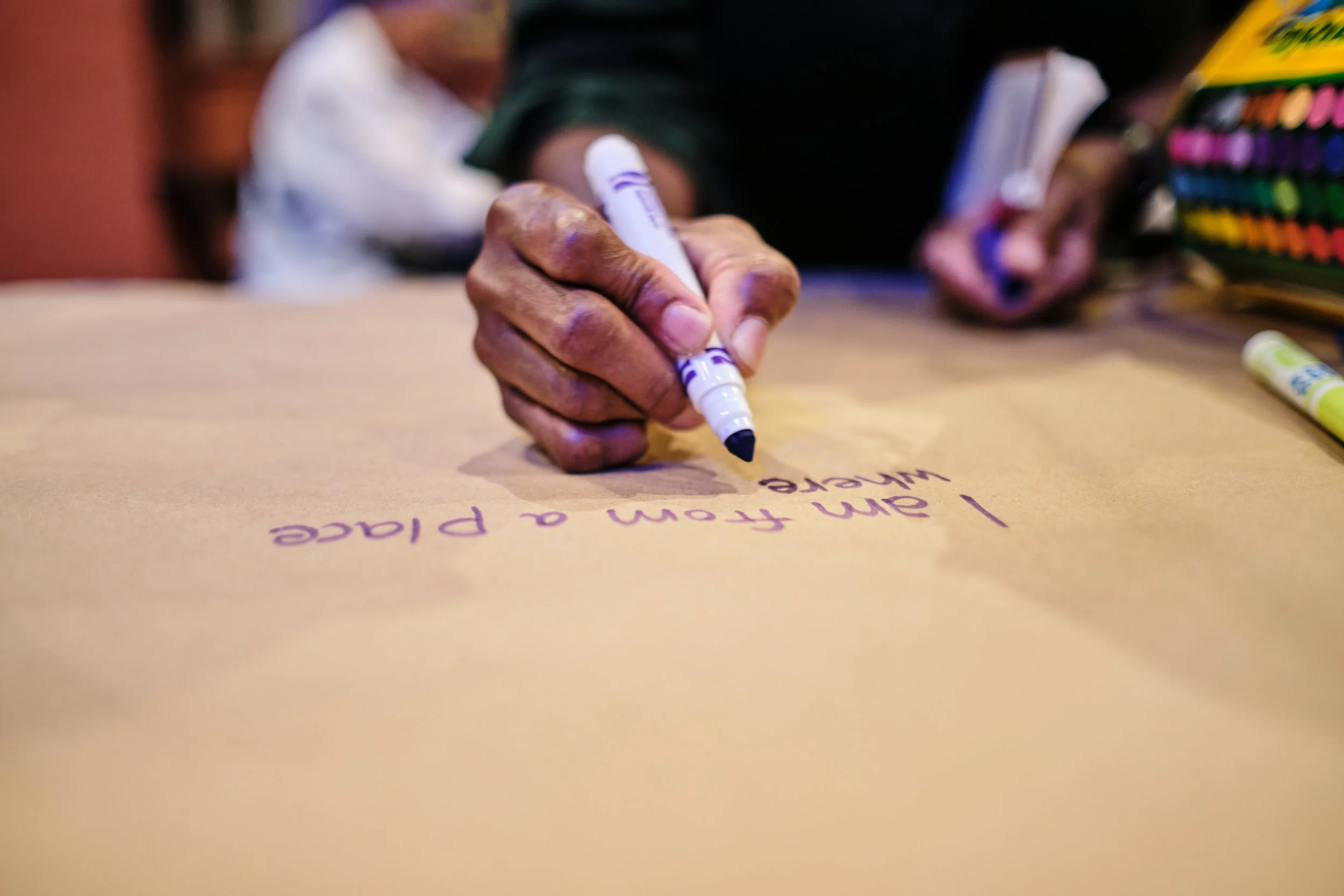
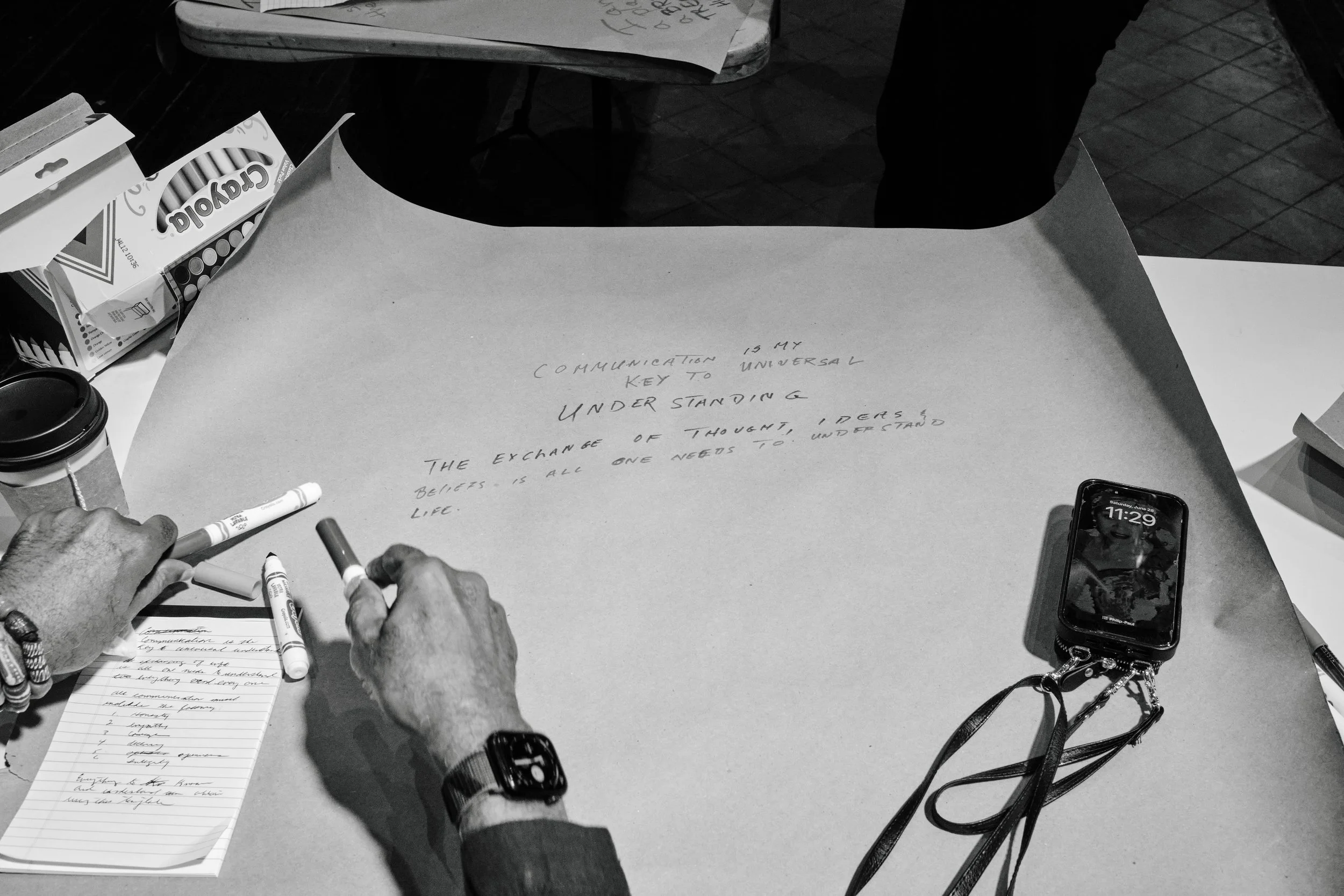
I knew that that first day, we had to create the feeling of group, because we didn't have much time. So that's how Lynda and I thought about the exercises and the conversations we wanted to have that day, because people were going to have to feel comfortable talking about who they were with people they may not know pretty quickly. I also tend towards not asking direct questions, because I feel like people think they know how they're supposed to respond
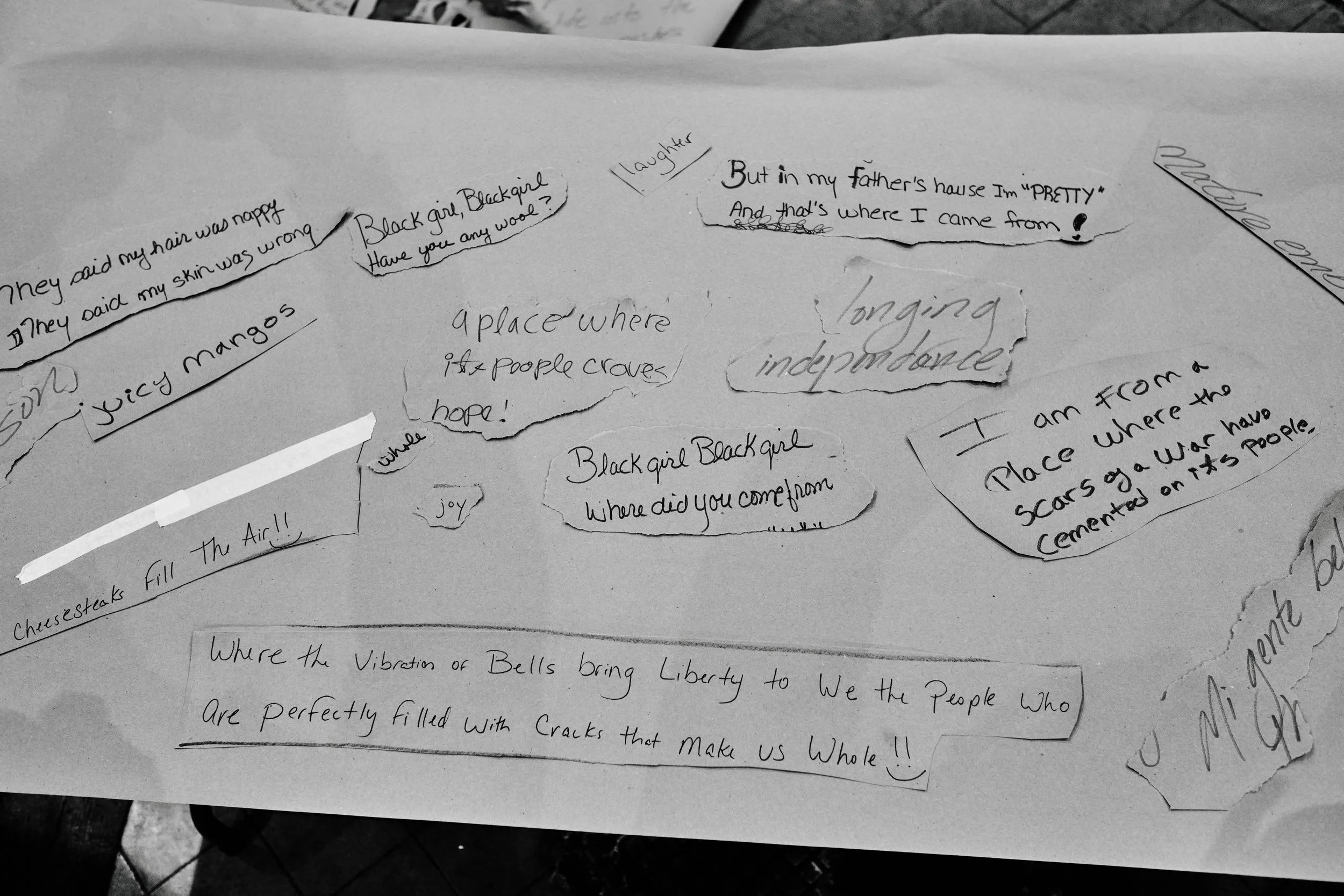
So instead of saying, “Where are you from?” I shared the prompt “I come from a place where…” and people couldn't say where they were from. So getting people writing, where they couldn't just say, Oh, I come from Senegal, and we eat this, and the weather is like that,. I said, “Tell me what you see, tell me what you hear, tell me what you smell. Tell me what you feel.” And so it also moves people into that place of emotion, of memory and to a place of deeper reflection.
CRS: I would love to hear more about that making. There’s such beauty in the process and the writing and the thinking and the being there and the emotion, and then the making. This work has so many ways for people to creatively engage their emotions, to engage the tactility of it.
LGB: I'm a crocheter, I'm a weaver. And it is a process of creating this garment.
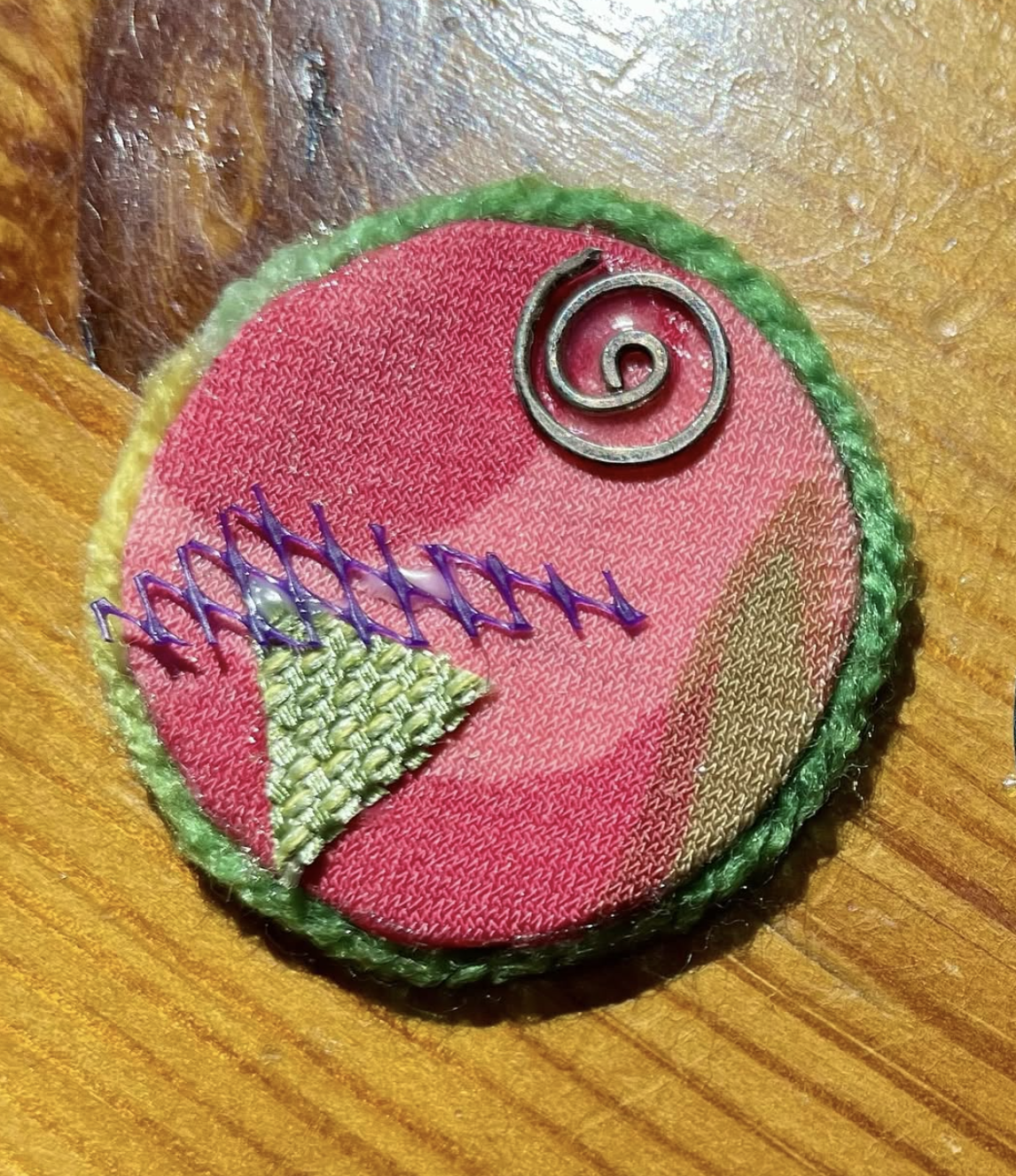
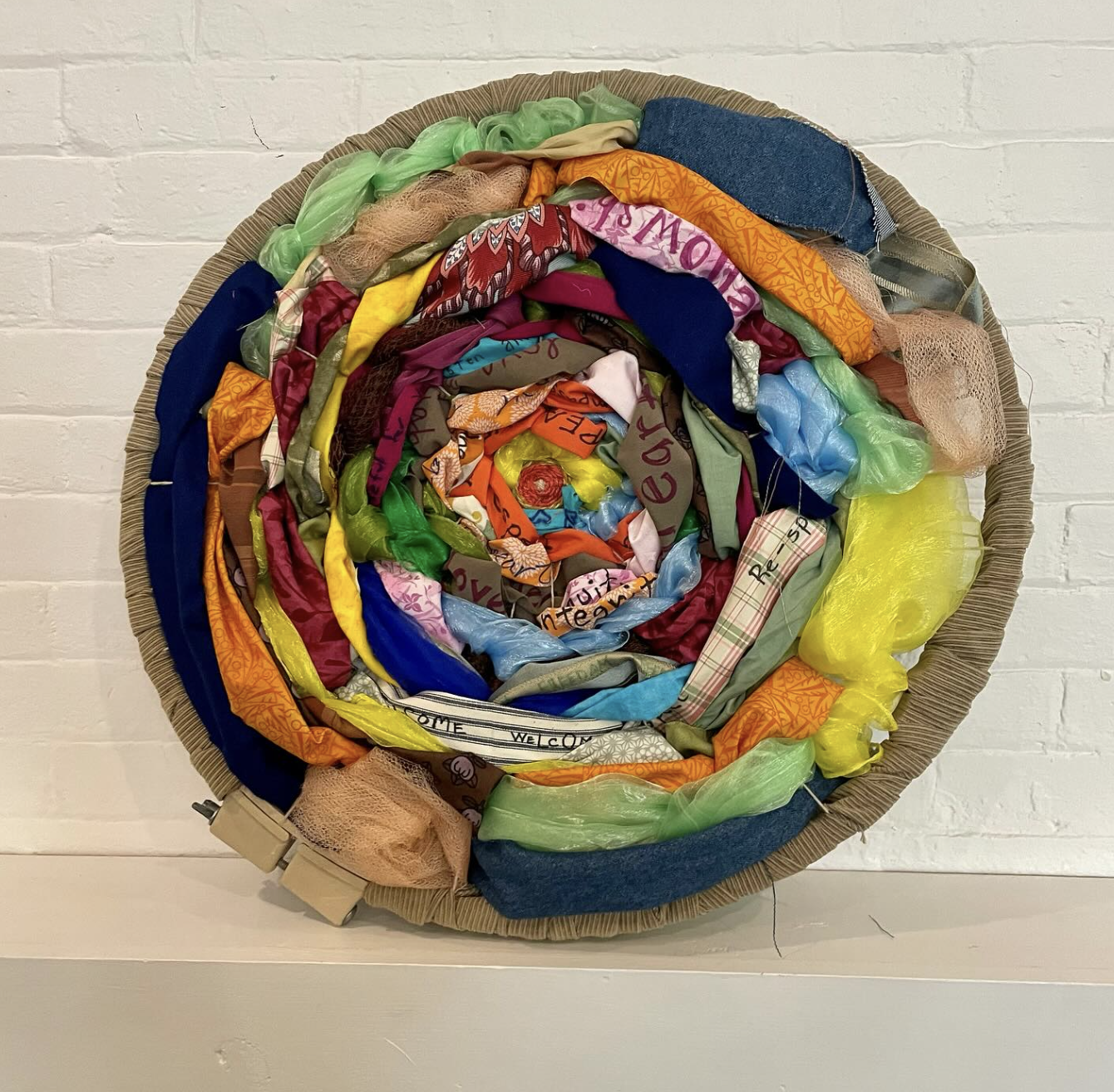
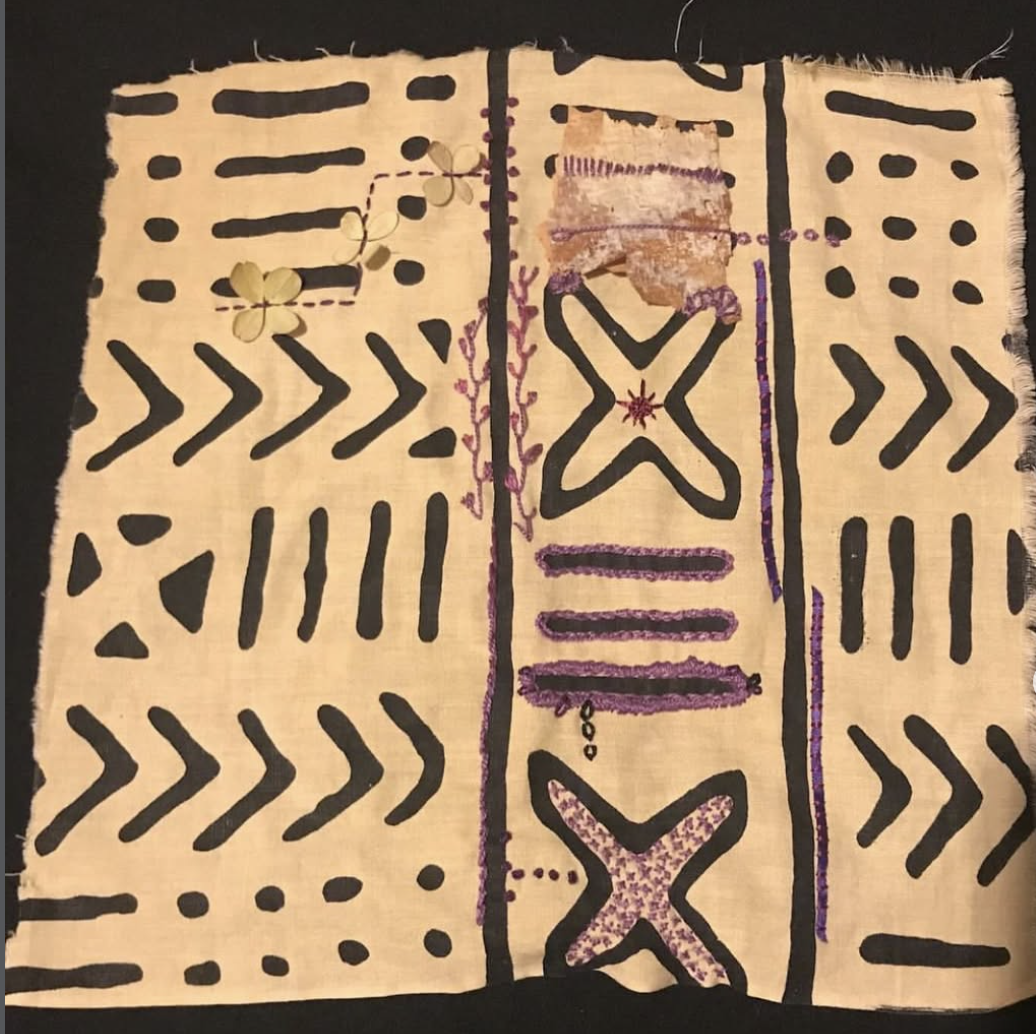
And you may have a sense of what you want it to look like in the end, but as you're making it, it's telling you something very different. You may drop a stitch, you may ruin an entire row, and you have to go back and redo that thing all over again. Or your yarn is not behaving the way that you expect the yarn to behave.
From session to session to session to session we were making room for what was happening with ICE, making room for someone who just had a baby and celebrating that, making room for loss, making room for all the personalities.
All of that was a part of our process of creating the tapestry. As Magda said earlier, we could have kept going, getting more inputs but we have a performance and an exhibition date. Yes, we do.
MM: I think what's important about the sessions -- where I've learned by watching others actually make some mistakes around it -- is not to be clear about the parameters of the work, both how you're doing work and who has direct influence over the outcome. it, which can be an uncomfortable conversation. I think artists tend not to like having it.
And many artists, if trained in a Western tradition, come from a tradition of the individual. For this project we shared that every person that they have a say, and we have to be true to that. So the first step is what were the parameters? Everyone knew there would be an exhibit, there would be a performance at the end of this.
We didn't know what else was going to happen along the way, but we made sure everyone understood this is where we're going to end up. And, you inform this.
I think what was important about those sessions and what we did well, even though this was about an art project, all the sessions allowed for people to bring as much of themselves into the space as we could hold. I think allowing people to experience what art does and that his is not about perfection. This is about you being able to express some part of your humanity or identity that you don't often get to share.
CRS: You have these community members who are offering stories and memories and a sense of the people who stand behind them and they're creating with you. And so you have this wealth of material, abundance of stories. So what happens in the process of transforming this storytelling, this gorgeous richness into what people come to see? How does it get from the stories we tell each other to the story we see in the exhibition and on stage?
LGB: It's a huge responsibility. So for me, there's a lot of reflecting on what was our original intent? What did we say we were going to do? How did we come to this project? And individual conversations with the group members to make sure we're getting it right. We're getting the essence of what this object means to them, what their story is, what they want to say when we're talking about what does it mean to be here now.
We need to hear their voices. We are so deeply connected that we don't even know how deeply connected we are one to another. That's also why I wanted to do this work. To say, folks, I don't care what color you are, we are deeply, deeply, deeply connected and our stories testify that.
MM: I agree completely with Lynda -- it is a privilege and also a responsibility. Because this is where things shift. Things have to be distilled.
The hardest part of all of this has been the amount to reflect on. What are we going to choose? And how do we choose it? How do those stories blend? If you're really looking at a diaspora, people who have just entered that diaspora, and people who have been in it for a long time, how do you tell a story? How do you choose which story someone shared gets put in and which doesn't? For me, the real struggle is that people can read a story. How do you evoke some of the environment that story was told in?
It’s an external journey and an internal journey. You never know in devised work exactly where it's going to go. But I think that the hardest part is that distillation of everyone's story, the little piece of themselves that they gave to you during that time.
It’s also been about recreating a sense of a psychological space that is informed by the way it felt when we were together as a group. We called it TO BE HERE. When the project was titled it is was a different time and place from now. To be here now is really different.
I was talking to one of the participants about her piece. And as we talked, she said: “I completely forgot that my first best friend in elementary school had immigrated from Cambodia. And she was my first best friend. The first friend I can think of that we just did everything together. And she goes, it's interesting, because I didn't think of her as an immigrant. Because I'm a six year old kid.” So she'‘s integrating that into her piece.
LGB: That just resonates with me so much. You know, the people in our everyday lives, we're not putting labels on them. I go back to the gift of all of those sessions and the people that I met, I'm not putting labels on these folks -- these are my friends.
And that's what part of this is all about -- the richness that is in each and every one of us. And the opportunity to really learn and develop yourself as a result of the relationships that you have, particularly with people who are not from the same place, don't have the same experiences, did not grow up the same way. But I think it's like those people, as Magda said, all those people who are just lining up, they want to say something. This is the opportunity for them to tell their own story, for us to tell our own story, not have someone else dictate, massage the story in a way that favors someone. There’s that line -- “until the lion learns to write, every story will glorify the hunter.” And so we are the lions telling our own story.
And that's what's really important is the elevation of who we are, they are, their stories, their experiences. It's deep, it's rich; there's sadness, there's laughter, and there's so much more to uncover. I know I learned something about myself and about my parents through this process.
And I'm still learning it. When it happened Magda and I were sitting in a diner during one of our project meetings, and as we were talking,I almost came to tears. I was like, oh my god, now I understand. I get it now. It was a powerful moment. It’s the kind of moment I saw folks haveagain and again in the sessions.
CRS: I was lucky enough to be at that first session, and that room felt like the right kind of warm embrace that opens up space for those moments. And it felt very connected, very quickly.
LGB: And that's what they all said when, when they were talking about how they felt. Everyone kept saying, you feel that sort of heart and soul connection very quickly. I'm grateful for everybody in the room.
CRS: Do you both want to offer some closing thoughts? Is there anything else that is important for someone walking in to know about the way this has taken shape or what they'll see on stage?
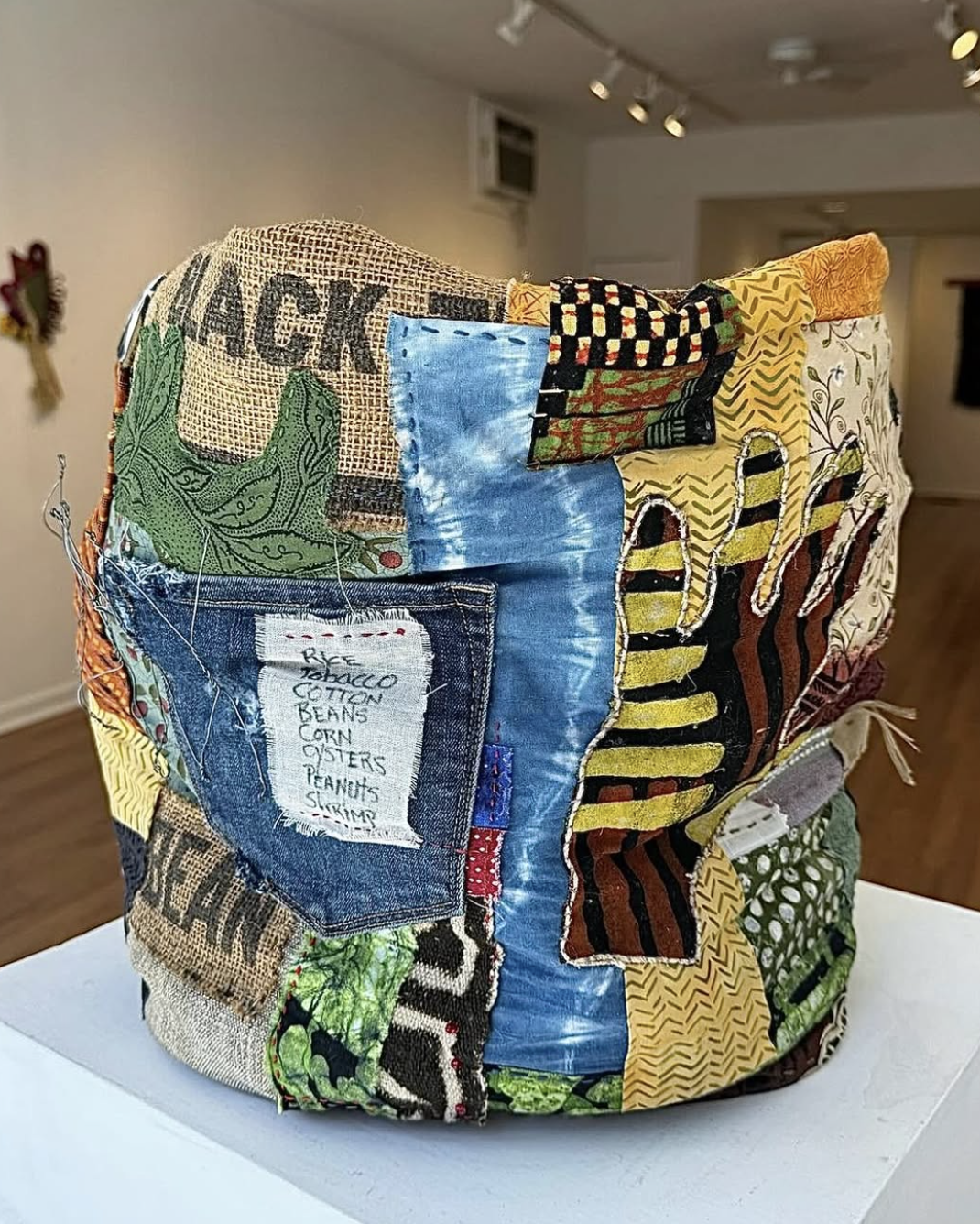
MM: I was talking to Lynda and I said, you know, I want people to think about their everyday objects as museum worthy. Because when we kept saying “exhibit,” I could tell that they were thinking, oh, that's like a museum, the things under glass.
I don't make anything like that. And I don't own anything like that. And my feeling is neither did the Egyptian potter. There are so many things in museums that really were just someone's things at one point. Someone created something, but they didn't know it was going to turn into a masterpiece.
Your things are worthy of other people looking at, with respect and being honored. I was going to put in a caserola, which are those big aluminum pots, and everyone makes rice in them and you see them in Latino restaurants. Everyone has one. The caserola is to Latinos as cast iron pan is to folks from the United States. And so I think that what people may come to see or hopefully what they will experience when they see the exhibit, are the items that people brought from home. That which is meaningful to them.
It's very important that what people experience is a connection to someone else's humanity. To see them as the individual who happens to be an immigrant. While that's an important part of their story, it’s not the complete story. That these are people who have families, who have childhood memories, who have struggles right now with being here and to be here now.
I get to know you, I don't see such simplistic terms -- I don't just label you, because we're seeing who they are as a person.I'm hoping that some of that happens in the telling.
This is one of those practical things in terms of co-creation. True engagement comes through trust. When you first meet people, my feeling is if you are the leading artist or the artist facilitator, you must be willing to give first what you expect to receive. You can't hide behind your artist's mask.
LGB: It's an unveiling of yourself. All of this is an unveiling of one's self and our willingness to be able to do that. You know, here we are, people who come together.
Some knew one another. Some didn’t. Many didn't know walking into a room of strangers -- why were they here? What is this about? And trusting and being willing to unveil yourself. We have to do that. Sometimes more than we really want to. But I think that's when the transformations begin to happen. And I think we all have to be open to transformation.
CRS: And what a beautiful transformation it's been. Thank you both so much for taking this time, and I’m looking forward to seeing the exhibition and show!