
Listen, Imagine, Fundraise, Create, Produce: Inside the Journey Arts process
On performance nights, I hear a lot of “wows.” Wow, this was so moving. Wow, I’ve never seen anything quite like this. Wow, everyone in Philadelphia should see this and they would understand why we need to fund the arts! (Yes, that’s verbatim from an audience member!)
And: Wow. So what does Journey Arts do to make things like this?
I’ve probably told you that we’re an artist-first performing arts producing organization. Maybe I’ve even said that we follow an artist’s idea from first sparks through to final performance. But my 30-second explanation as we’re talking post-show doesn’t really cover the depth of how Journey Arts makes art.
Here’s how it works.
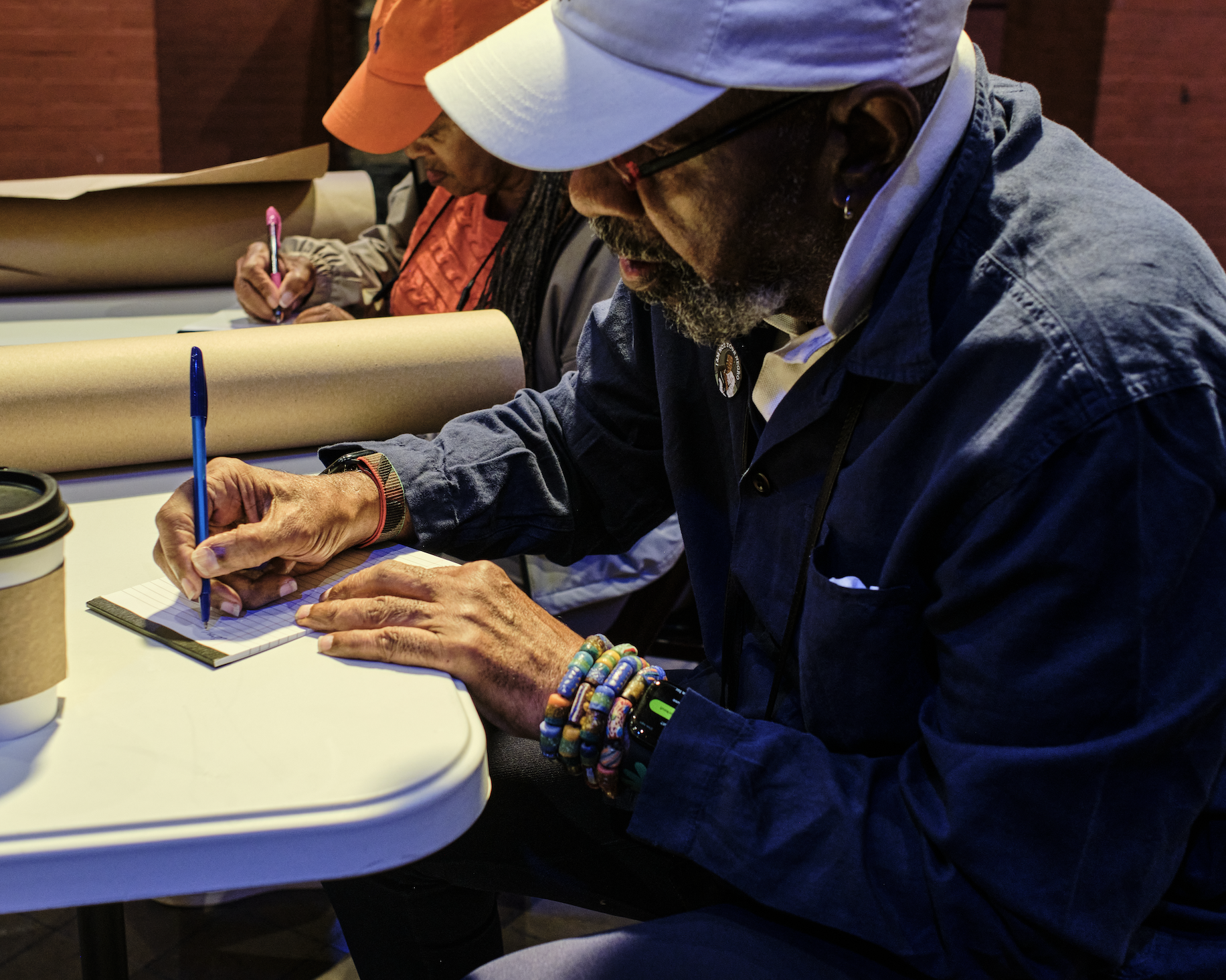
TO BE HERE Creative Sessions, 2025. Photo: Christian Hayden.
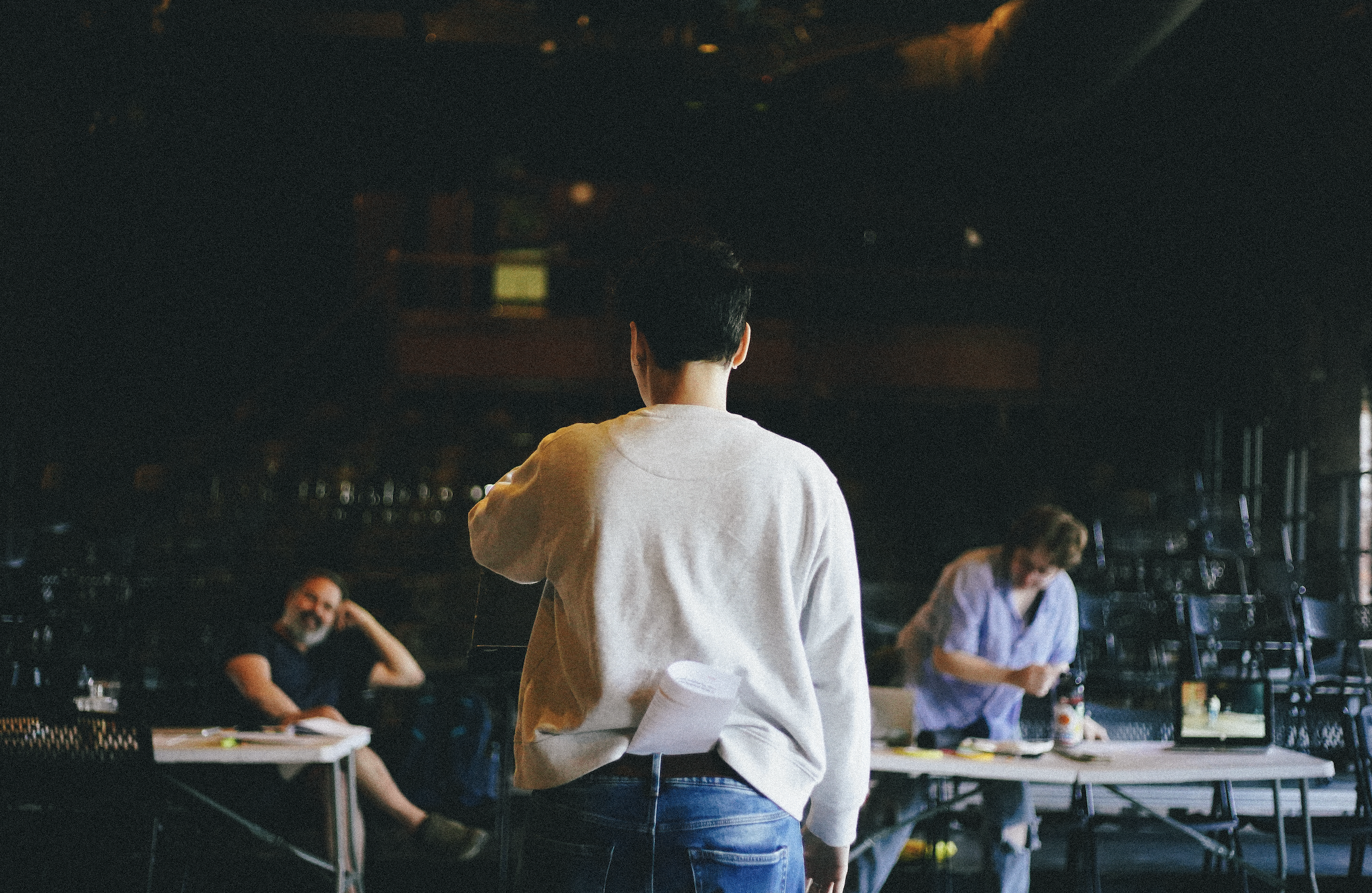
ESTO NO TIENE NOMBRE, Rehearsal, Spring 2023. Photo: David Evan McDowell.
We start with listening. Artists come to us with the seeds of an idea -- artists we know, artists who have been recommended by their colleagues, or artists who are intrigued by the way we produce shows. We are a genre-expansive performing arts organization focused on telling uncommon stories, and we’ll chat with anyone: poets, musicians, dancers, playwrights, directors. If the kernel of rigorous artistic work is there, and we think we can help produce it well, we’re in. Tell us it’s four pianos on stage focused on community-centered social justice issues. Tell us a community of people affected by involuntary migration will take control of the stage. Tell us it is critical to trace the histories of Latina lesbian love to know that you belong, and that the next generation of women searching for their stories will belong too. Your ideas are beautiful, bold, and need to be seen by an audience.
We follow listening with imagining. If we feel we can help nurture the seed of the idea through a creative process and complete it with a fully realized production, we start considering the process in tandem with the artists. Most of our shows involve a community process, and whether that’s drawing from oral histories, story circles, or one-on-one conversations, these ideas take their own unique path to get to completion. Maybe the work calls for story circles from which an ensemble emerges. Maybe it calls for transcribing stories and finding the poetry within. Or, maybe, it calls for a group of people to meet, build connections, and then collectively make decisions on the final work. Finding that pathway is crucial to envisioning the contours of the creative work.
Next, we focus and fundraise. With the artistic creation-pathway clear and the artists set on what the endpoint production could look like, we turn to raising money. We apply for grants from foundations, and work with individuals to make sure the process and the performance has the resources it needs for success. And sometimes, this process takes years, with funding successes and misses as we try to build enough funding for artists to be paid fairly for the work they are creating.
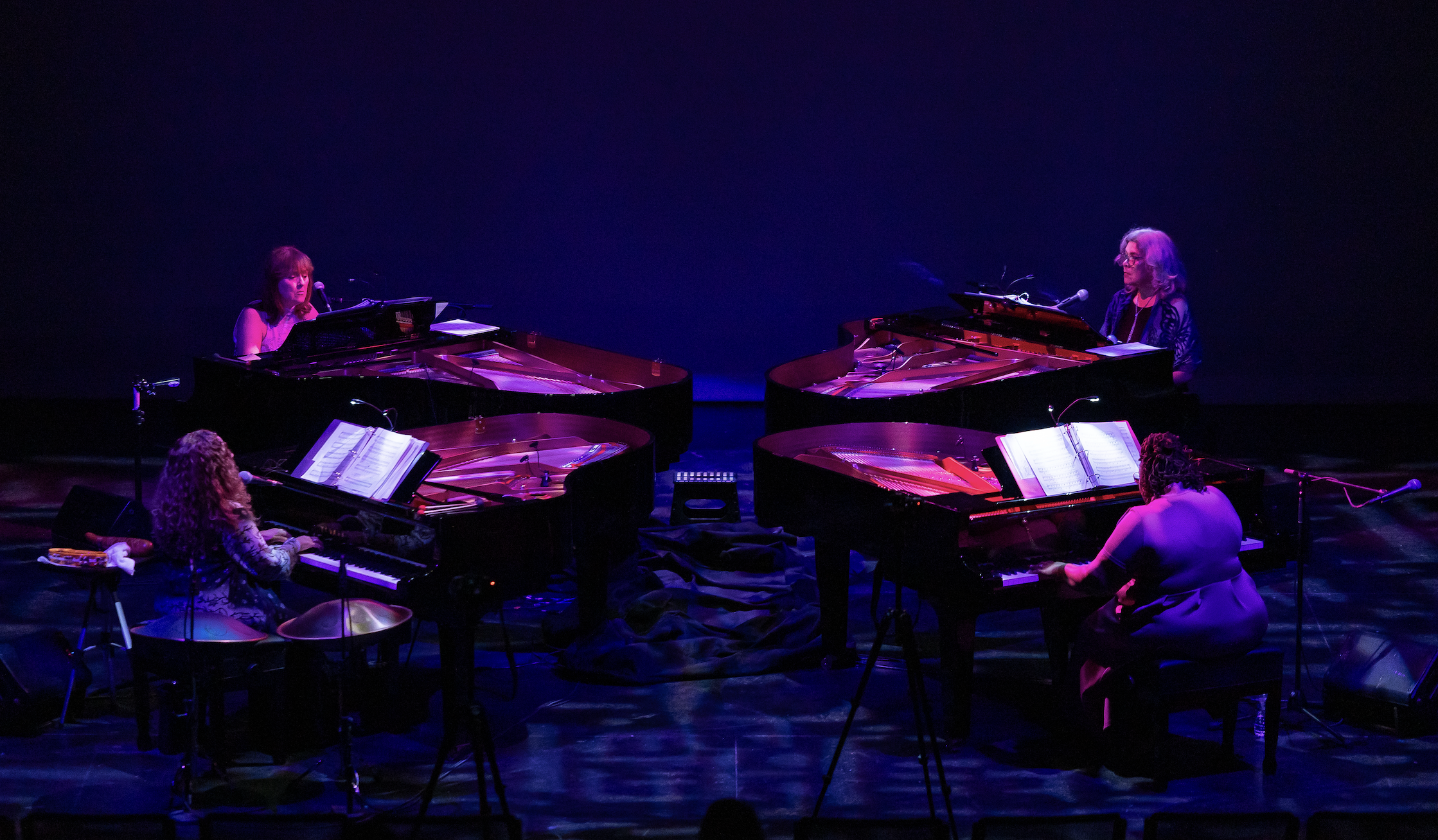
Eight Eight Time, April 2025. Photo: Steve Weinik.
Then, we create. The artists gather their community, and we take the amorphous idea from its sparkly imagining phase to creative community research to shaping words and tone and content and emotion into a show. We set up benchmarks for creative processes, pull in the right people (hello designers!), and start to figure out the pieces that will make this performance one-of-a-kind. And creating involves problem solving. Here’s where the work gets fully realized into nuts-and-bolts life. It could be that we’re figuring out how to build a black box within a larger stage so we can fit four pianos, but not lose the intimacy of how the music was generated. Or we’re trying to turn a space into a dance hall/grandma’s living room from five different decades. Or we’re thinking through how to use mirrored flooring and piles of dirt to find an endless and eternal connection with the earth. This is the moment when there is an enormous investment in both the level of detail and the right amount of people-power it takes to bring the show to the stage.
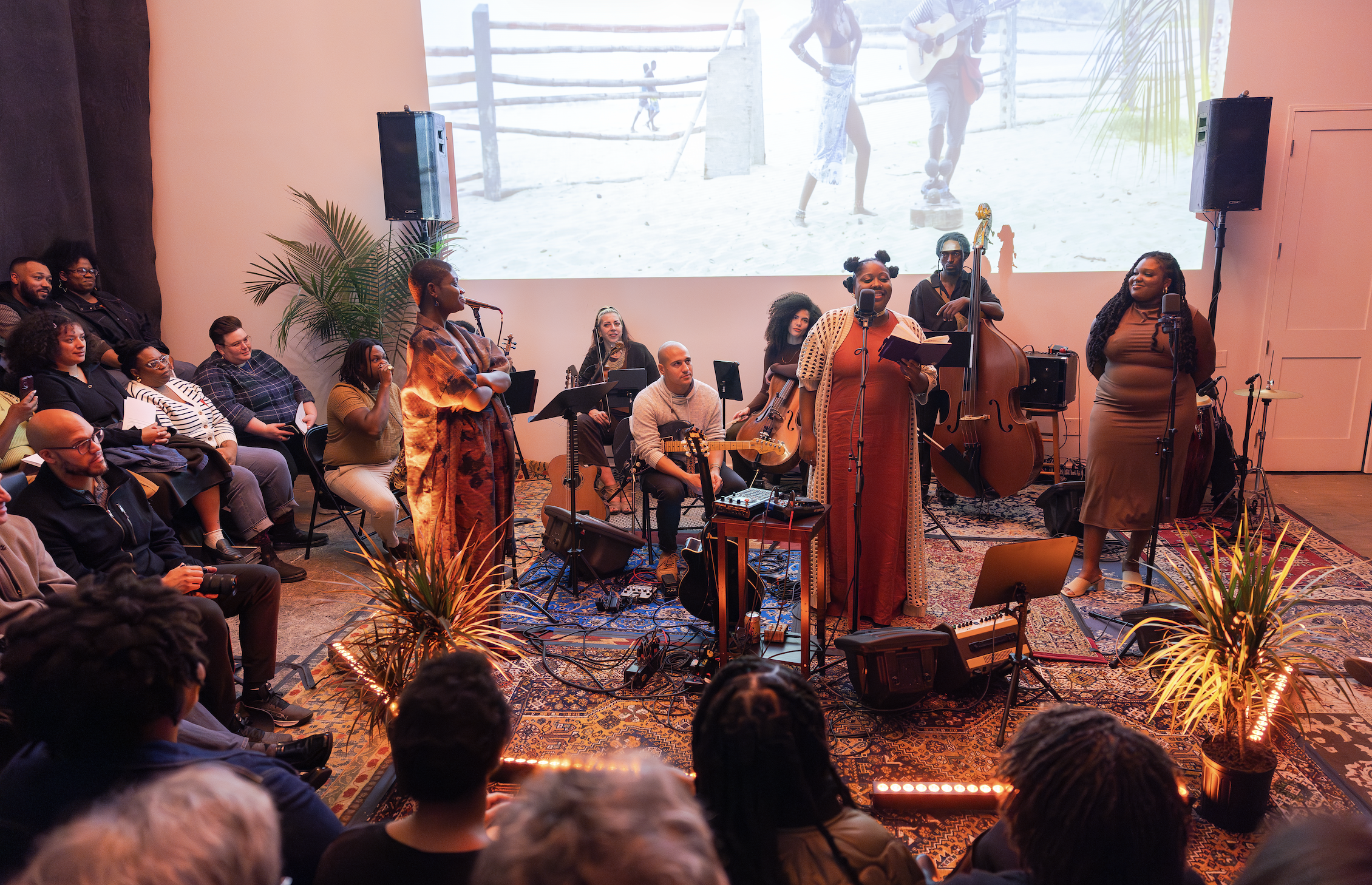
MIWA, November 2025. Photo: Steve Weinik.
Finally, we produce the performance. When you walk in the doors of the performance space, you’re seeing the last 10% of our process. Most shows take two to three years from initial conversations to being stage-ready. And in that time, we’ve focused on anything and everything that realizes the artistic vision, from imagining the process to amplifying the ideas into the world in their artistic form. You know what this looks like in those final, glorious moments of performance. It’s walking into a piece of Haiti in Philadelphia. It’s exploring the meaningful objects of an exhibition-film-play following the stories of migrants and immigrants. It’s the multi-course Assamese meal that’s seamlessly tied to the Sattriya dances happening on stage. Each of these gems had a full and rich process as we conjured a pathway from beginnings to blossomings.
And that’s what we do at Journey Arts.