
To Be Here…Now
Since our initial meeting, our communities have changed. Our schools, workplaces, neighborhoods…our country has changed. For many of us, everyday tasks like going to work, taking our children to school, or leisurely walking in our neighborhoods are now fraught. We hold on to our origin stories and to new sustenance as we navigate today. We hold on to the promise in each one of us…to be here now.
Beach Cross
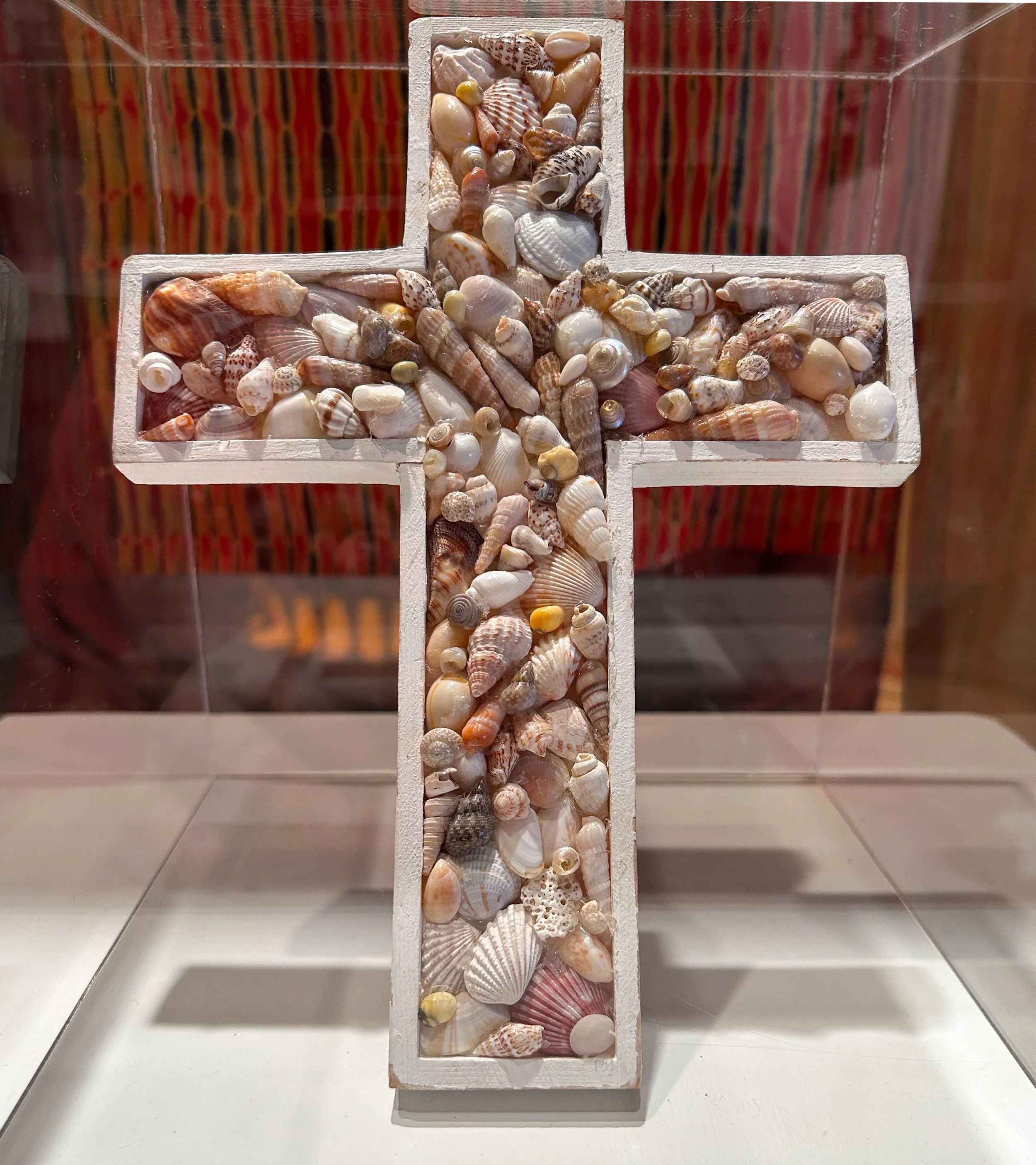
Rochelle T. Cooks
“My maternal great grandmother and great aunt was Episcopalian. My maternal grandmother and mother are Catholic. I was baptized as a baby under the Catholic religion, then baptized as a teenager in the Baptist denomination. Faith and migration or travel are important to my family’s history, presence, and future.”
David “Dawud” Lee
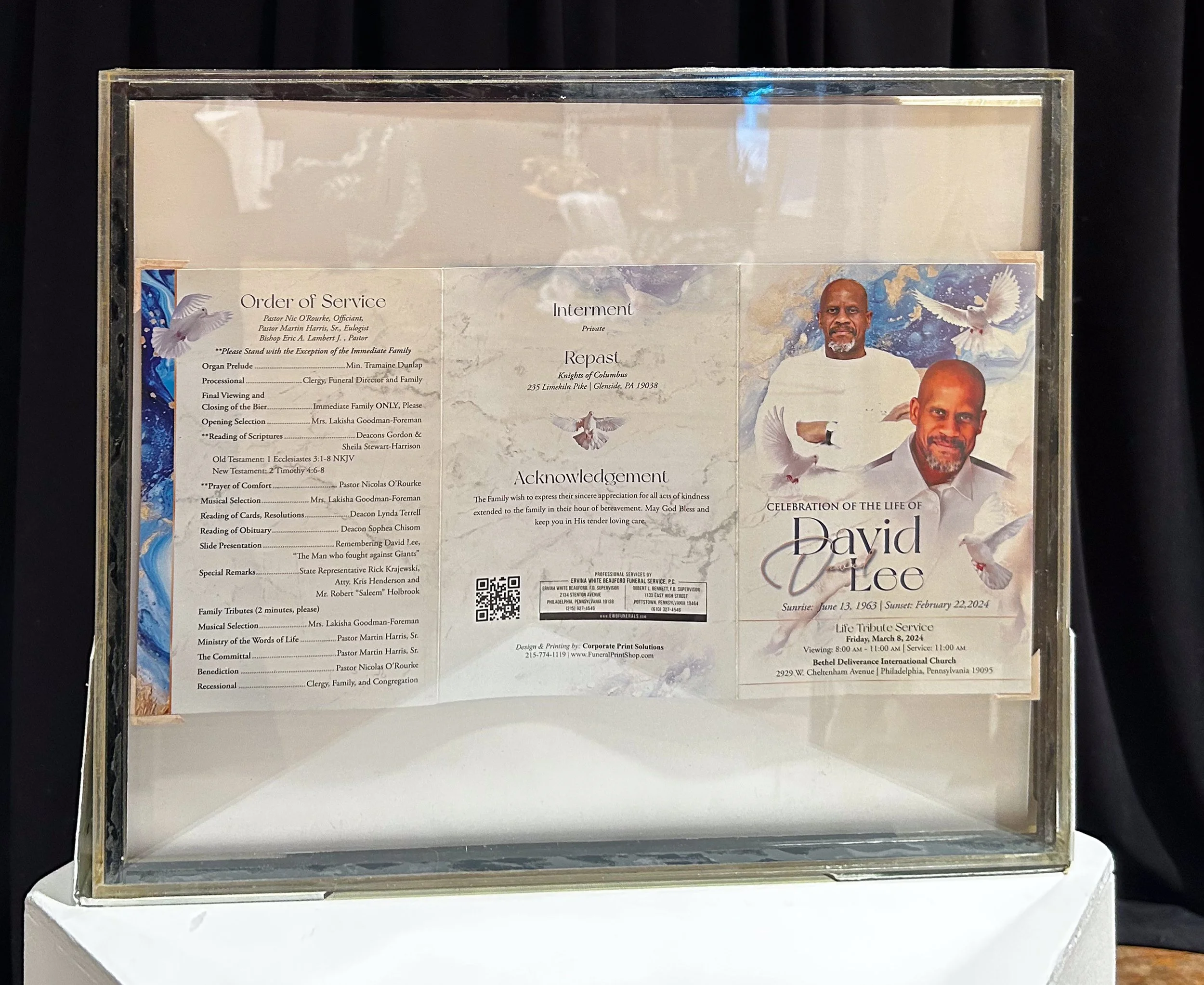
Anonymous
“He is my chosen father and one of the best people I ever met. Very kind and caring.”
Three Hours
Catorce Años en Tres Horas

Tamara
Paper maché mask that reflects part of the immigration process.
Máscara de papel maché que refleja parte del proceso migratorio.
Spirit Animal Jewelry
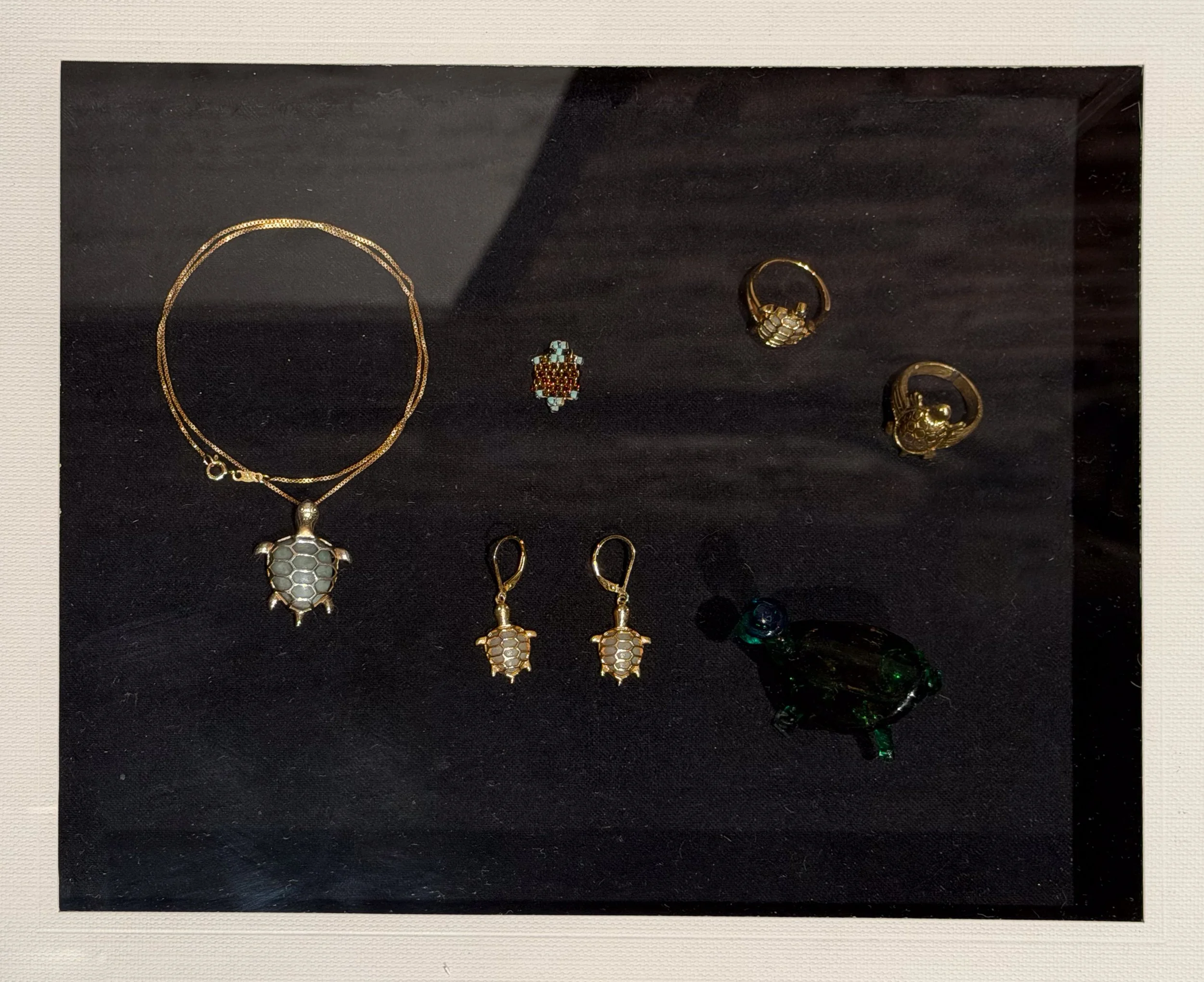
Aliyah Gardner
“Turtles are my spirit animals. They remind me to stay in my own lane, celebrate other’s successes and at just the right time, I will be celebrating myself! Turtles are also a reminder of the hope and strength of our ancestors who made it through the middle passage. We are a portion of their greatest dreams moving at our own pace to obtain freedom, justice and peace.”
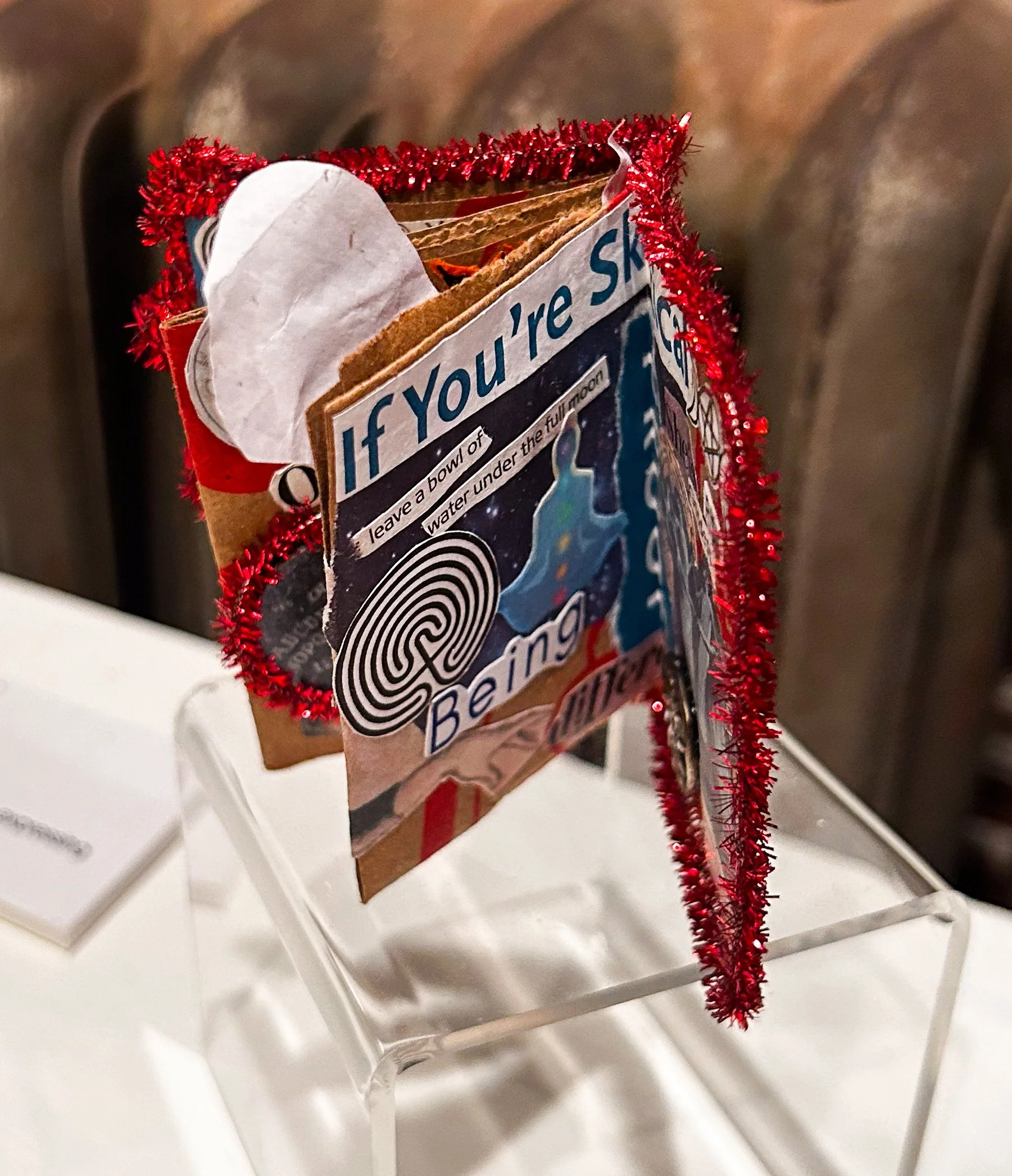
Labyrinth Journals
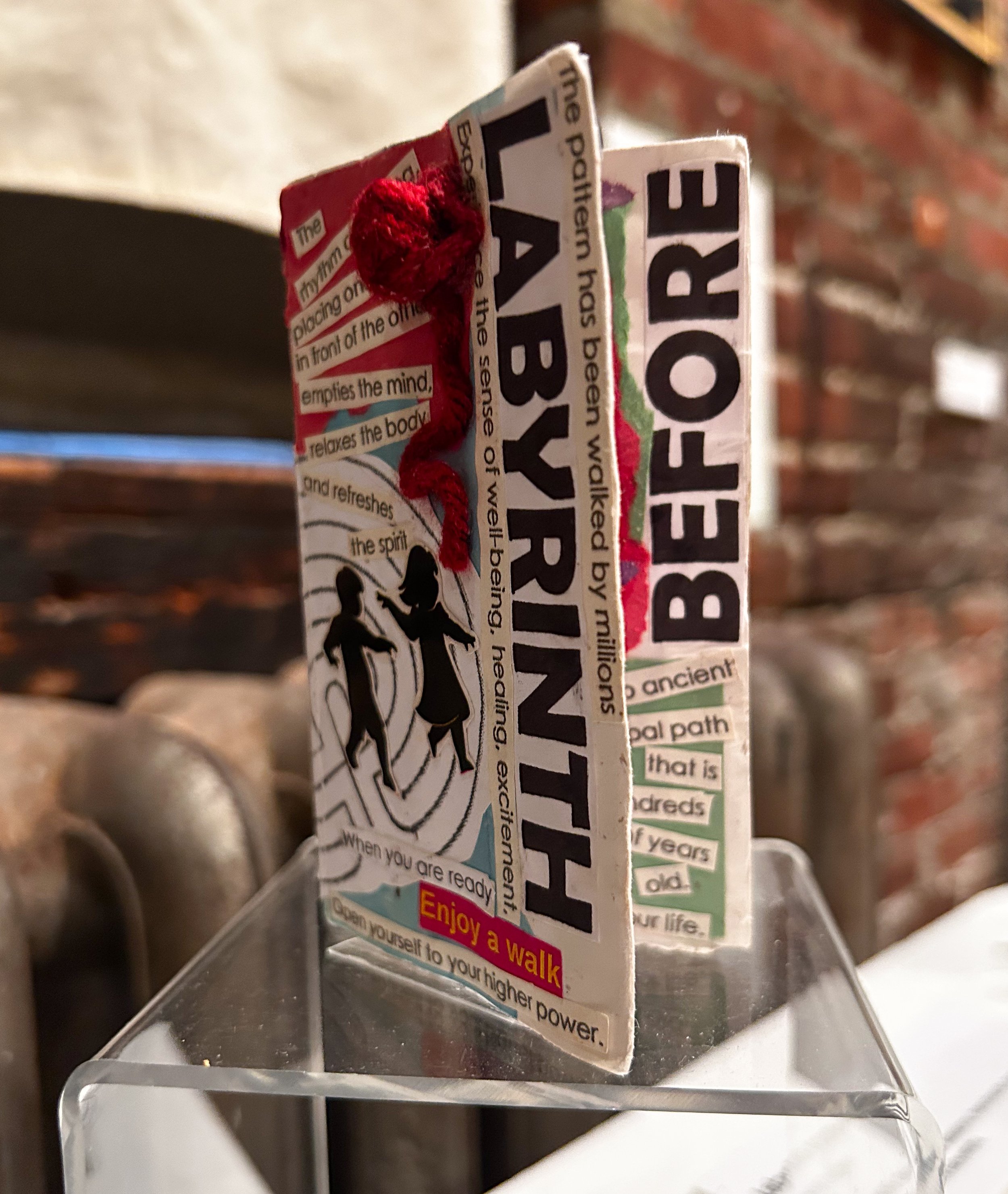
Athena Dugan
A labyrinth facilitator and artist, Athena made these books expressing her passion for labyrinths during our community conversations.
Wedding Day Gift
Cadeau de Mariage
Mariama
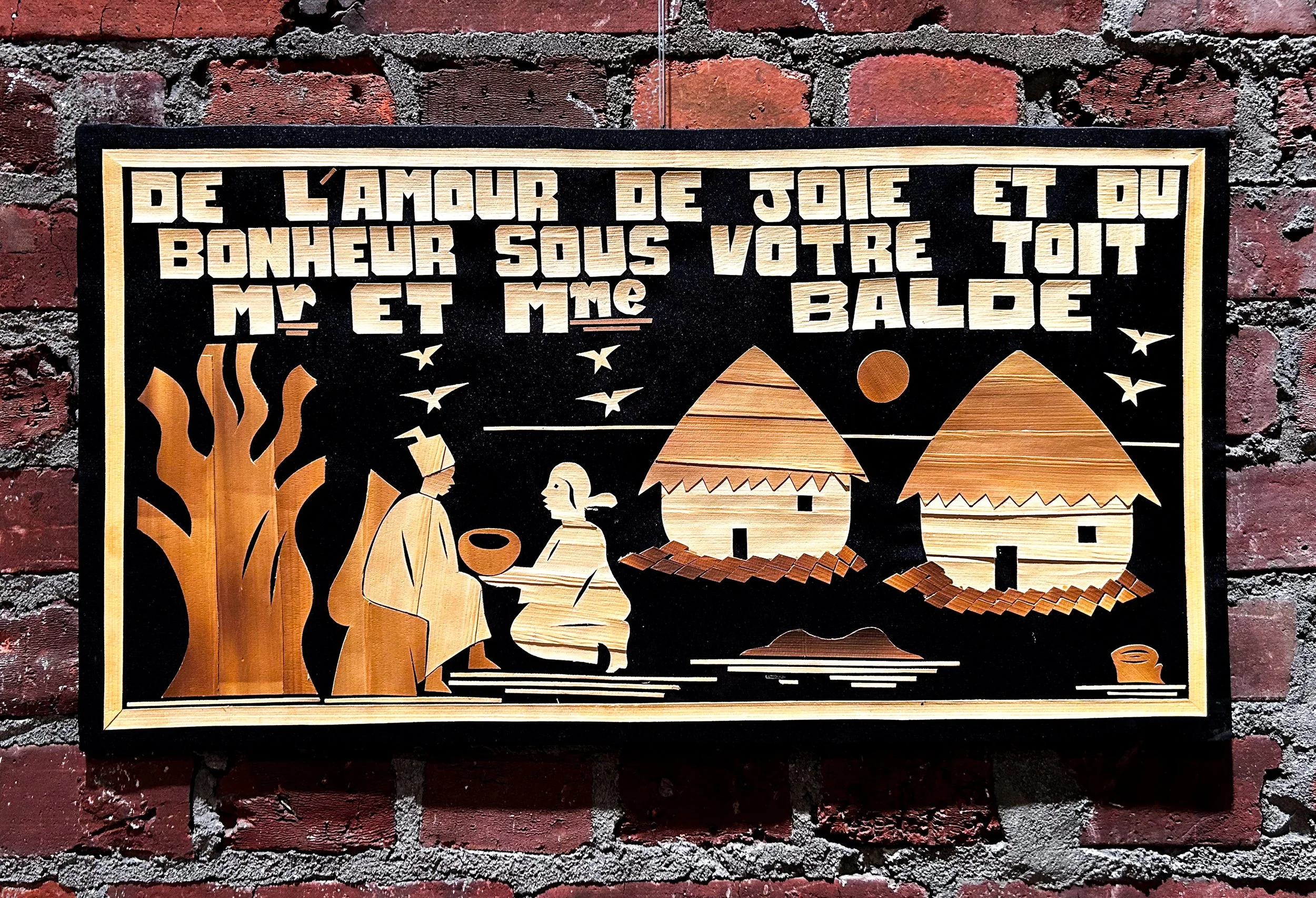
“Carried on the plane, wrapped in plastic and clothing to protect it,” this handcrafted heirloom hangs in Mariama’s and Moussa’s living room because "I want everyone to see it first when they come into our home."
“Transporté dans l’avion, enveloppé de plastique et de vêtements pour le protéger,” cet objet hérité, réalisé à la main, trône dans le salon de Mariama et Moussa’s, car “je veux que ce soit la première chose que tout le monde voie en entrant chez nous.”
Three African Women
Trois Femmes Africaines
Moussa
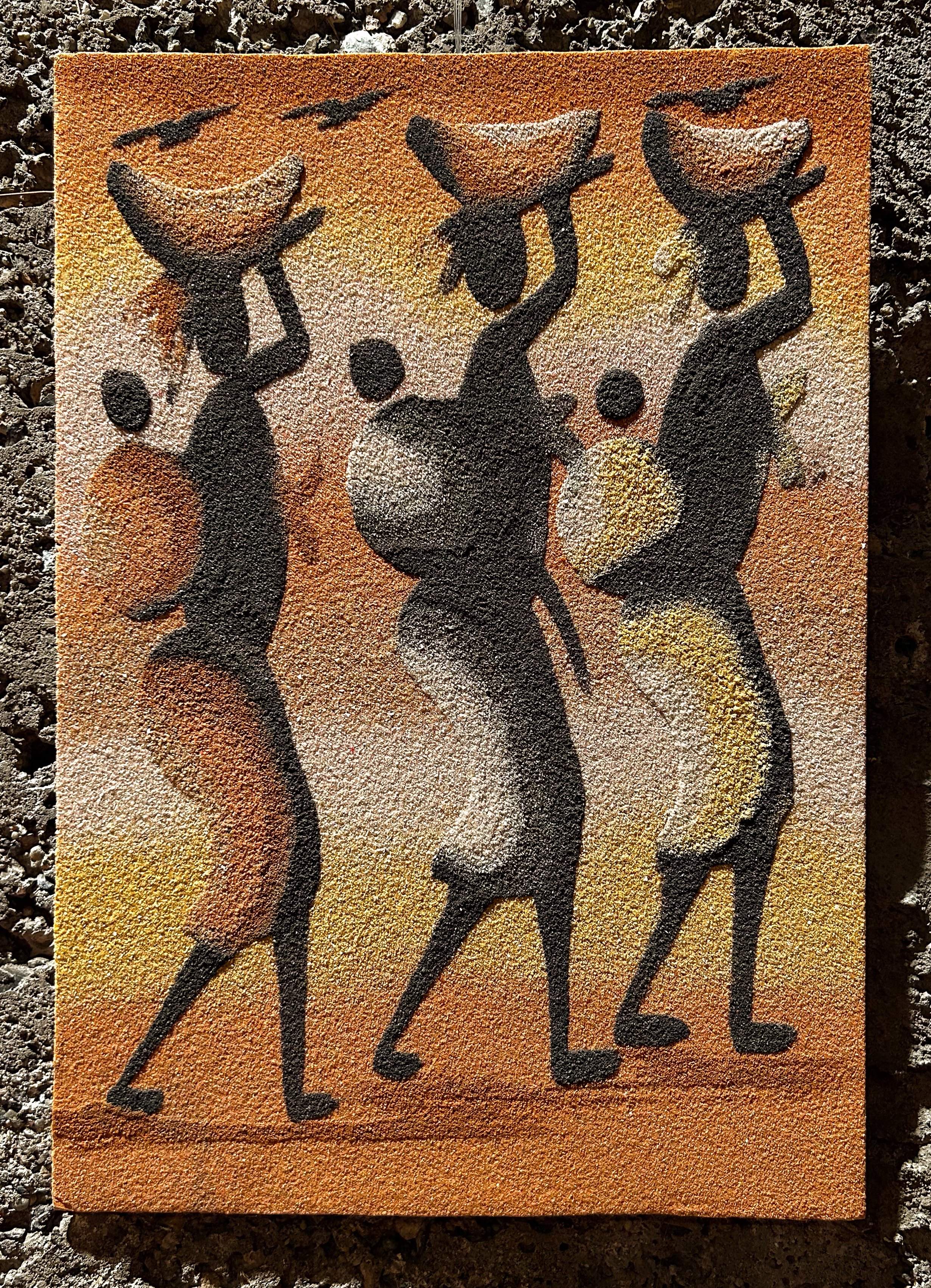
“It was during my visa process to come to the U.S. I had the opportunity to visit Gorée Island. There, I commissioned a special painting made by a local artist using colored sands from the coasts of Africa. This artwork embodies the history of forced migration; as I listened to the stories on that island, I felt inner tears flowing within me. The painting depicts three women carrying a child on their back and a calabash on their heads; it is the very image of the bravery and strength of African women.This representation reminds me of my roots, especially the Guinean agricultural fairs of my childhood.”
“C’est au cours de mes démarches de visa pour venir aux États-Unis que j’ai eu l’occasion de visiter l’île de Gorée. Sur place, j’ai commandé une peinture unique à un artiste local, réalisée à l’aide de sables colorés provenant des côtes africaines. Cette œuvre incarne l’histoire des migrations forcées ; en écoutant les récits qui résonnaient sur cette île, j’ai senti des larmes intérieures couler en moi. Le tableau représente trois femmes portant un enfant sur le dos et une calebasse sur la tête ; c’est l’image même de la bravoure et de la force des femmes africaines. Cette représentation me rappelle mes racines, et tout particulièrement les foires agricoles guinéennes de mon enfance.”
Senegalese Household Statues:
A Symbol of Marital Harmony
Anonymous
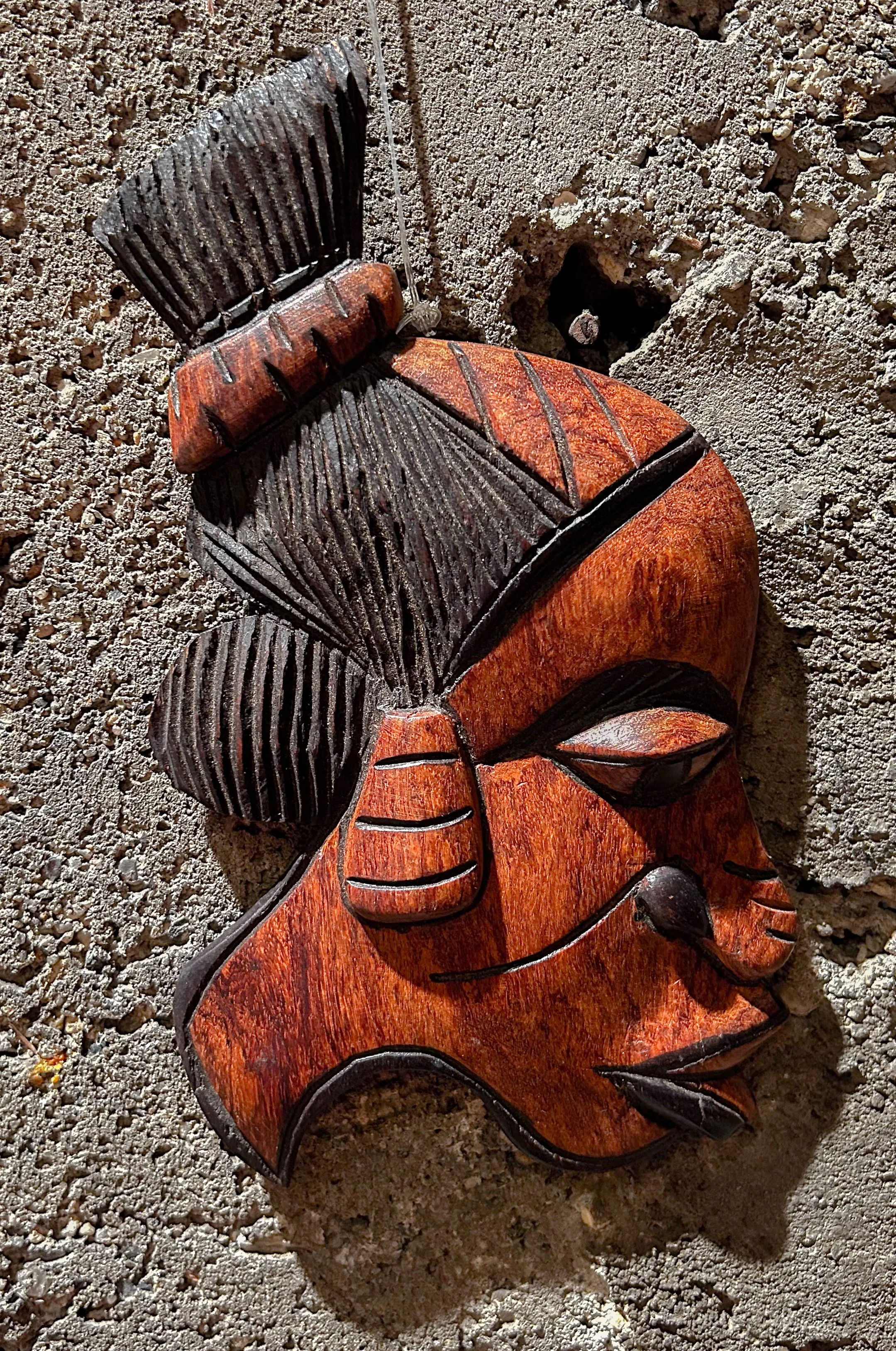
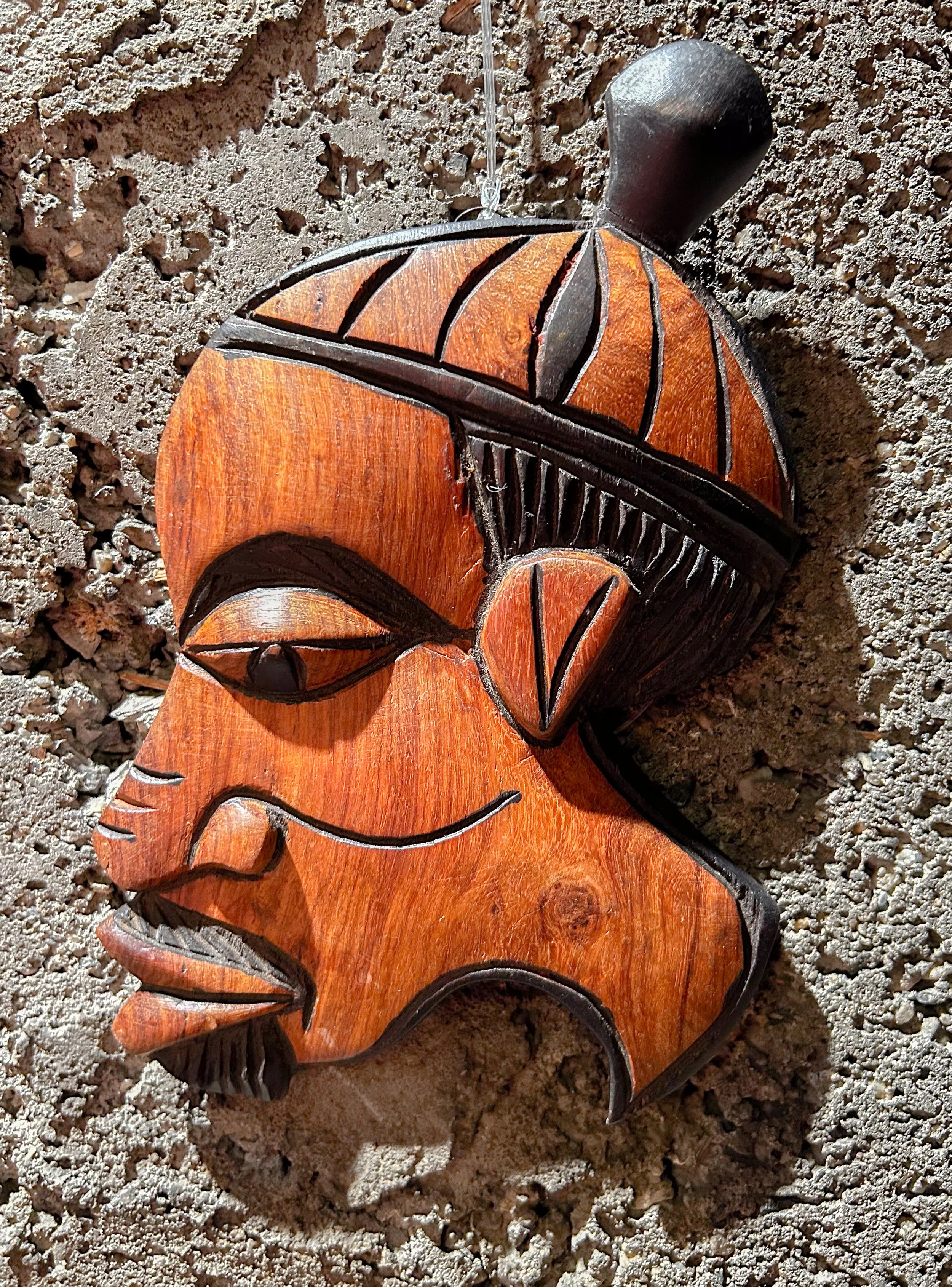
In some Senegalese homes, these figures represent the couple and the overall harmony of the household. This tradition reflects a cultural value shared across many Senegalese families: maintaining peace, dignity, and emotional stability within the home—especially for children.
In this case, when the man and woman face each other, they are on good terms. The home is seen as balanced and peaceful. Another example, when both figures look away, they are both upset with each other. This indicates conflict or a lack of harmony between the couple.
In this way, the statues act as a quiet reminder that relationships require care, and that family unity is something to be safeguarded.
Caged
Barbara Kigozi
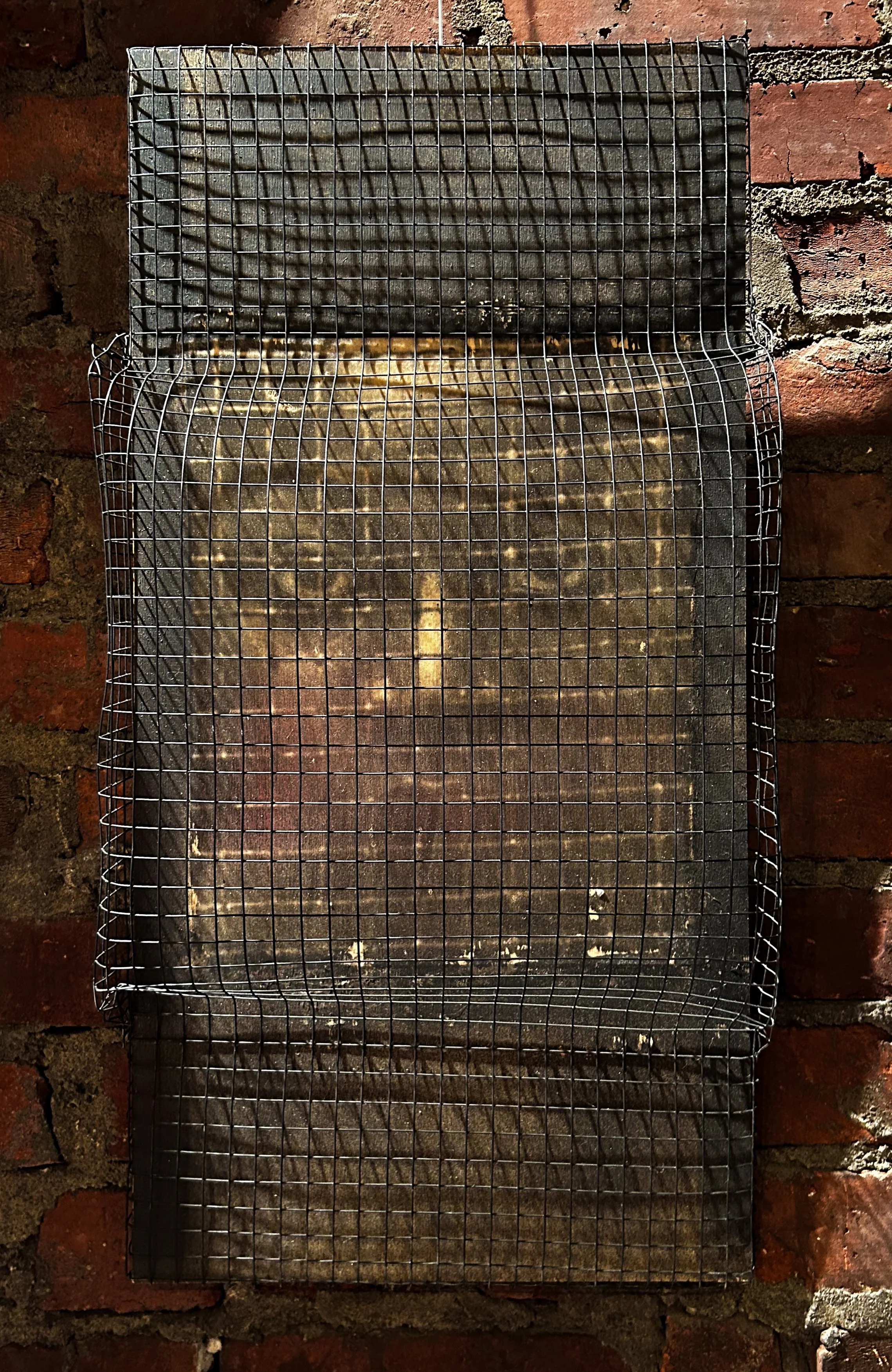
Caged conveys a question and statement. “Are we caged or are we staring out at the caged oppressors?”